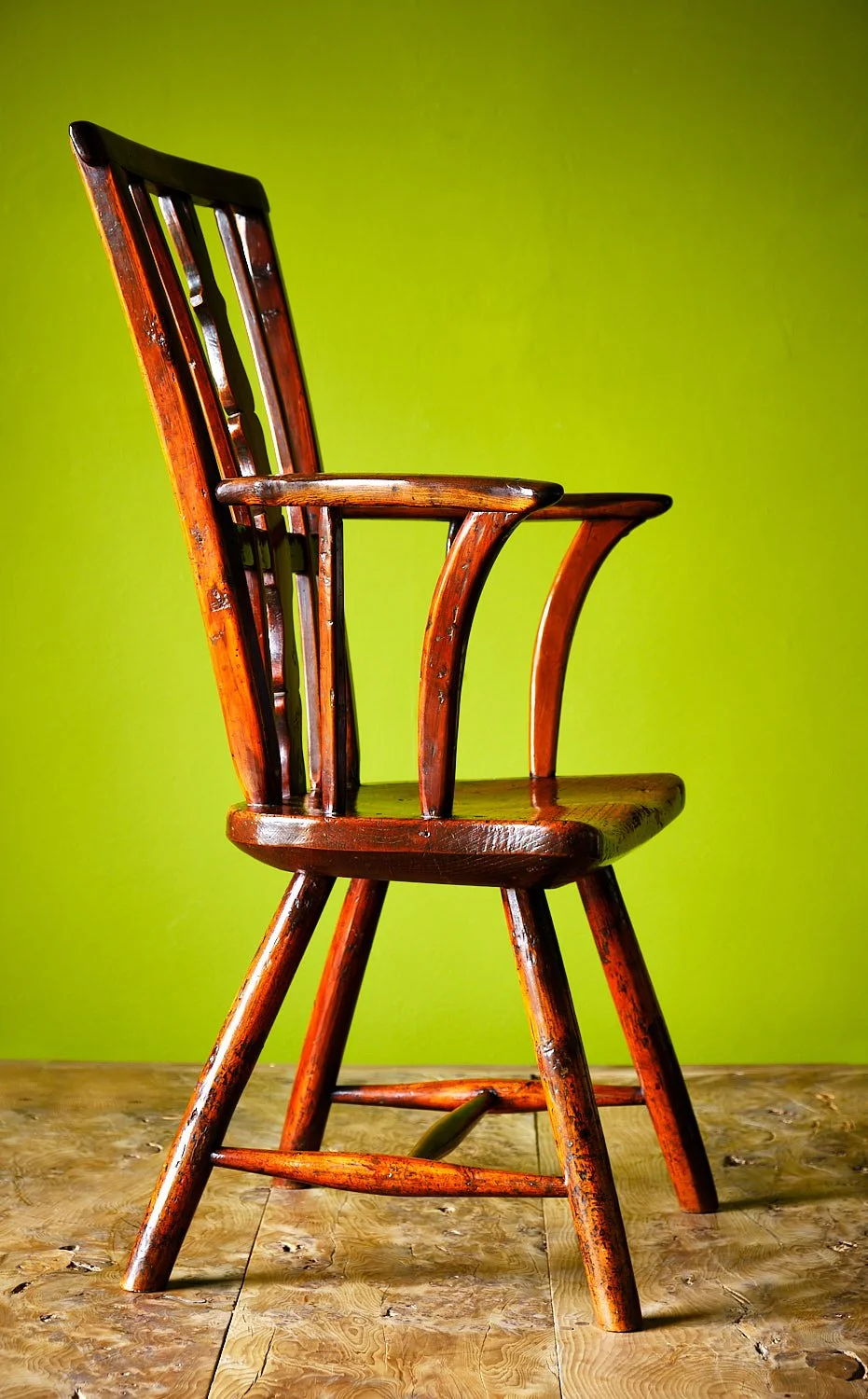
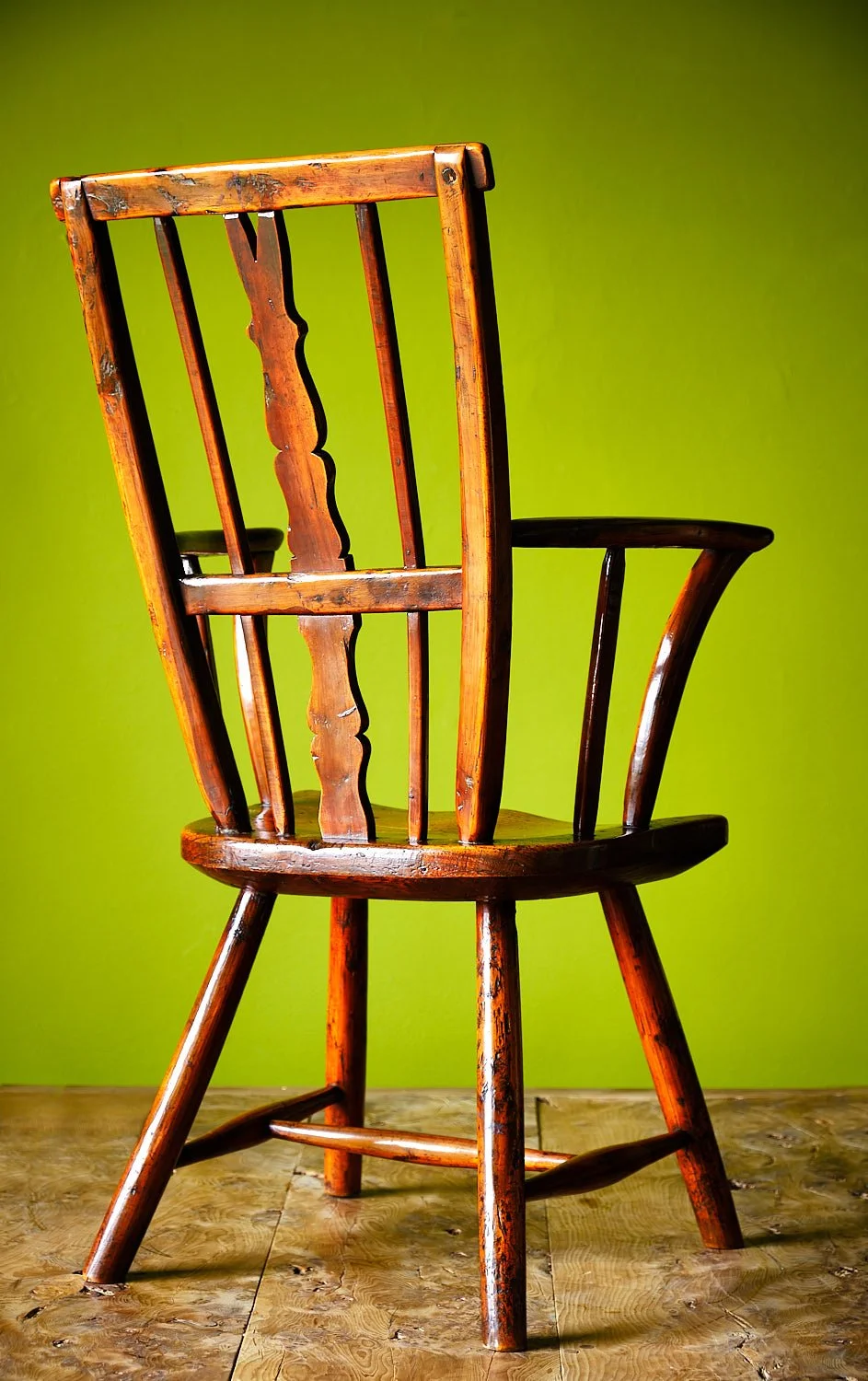
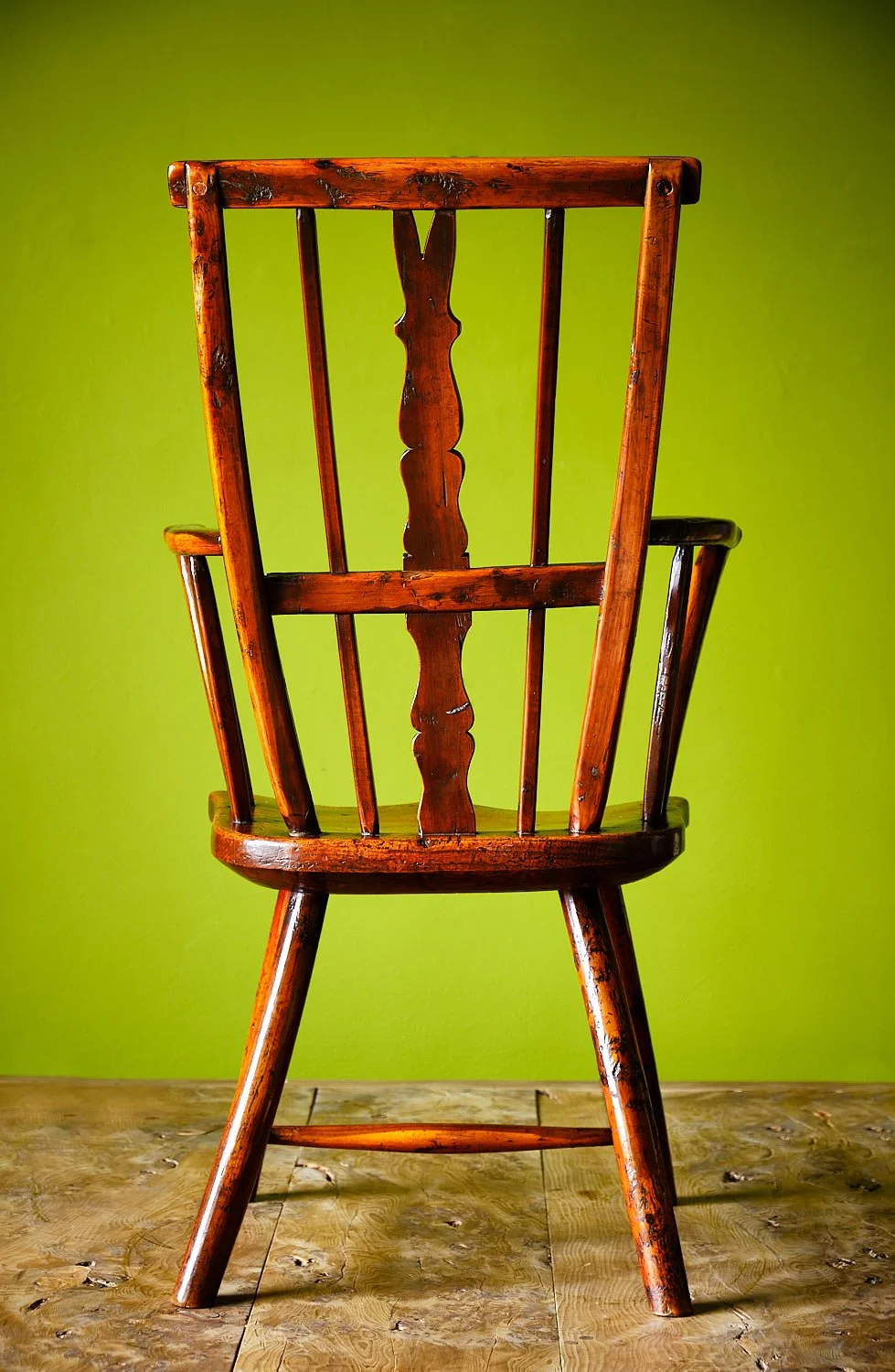
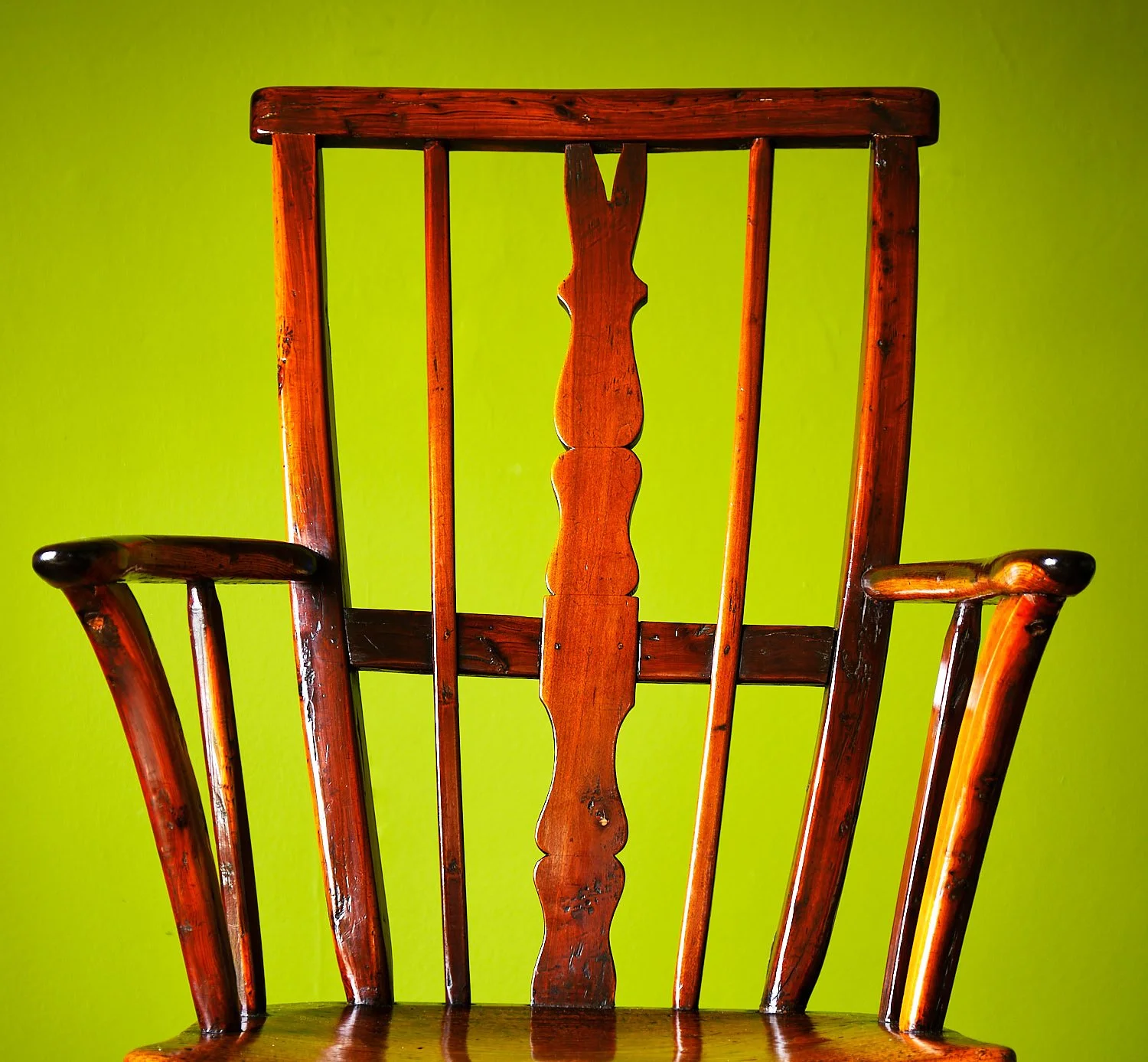
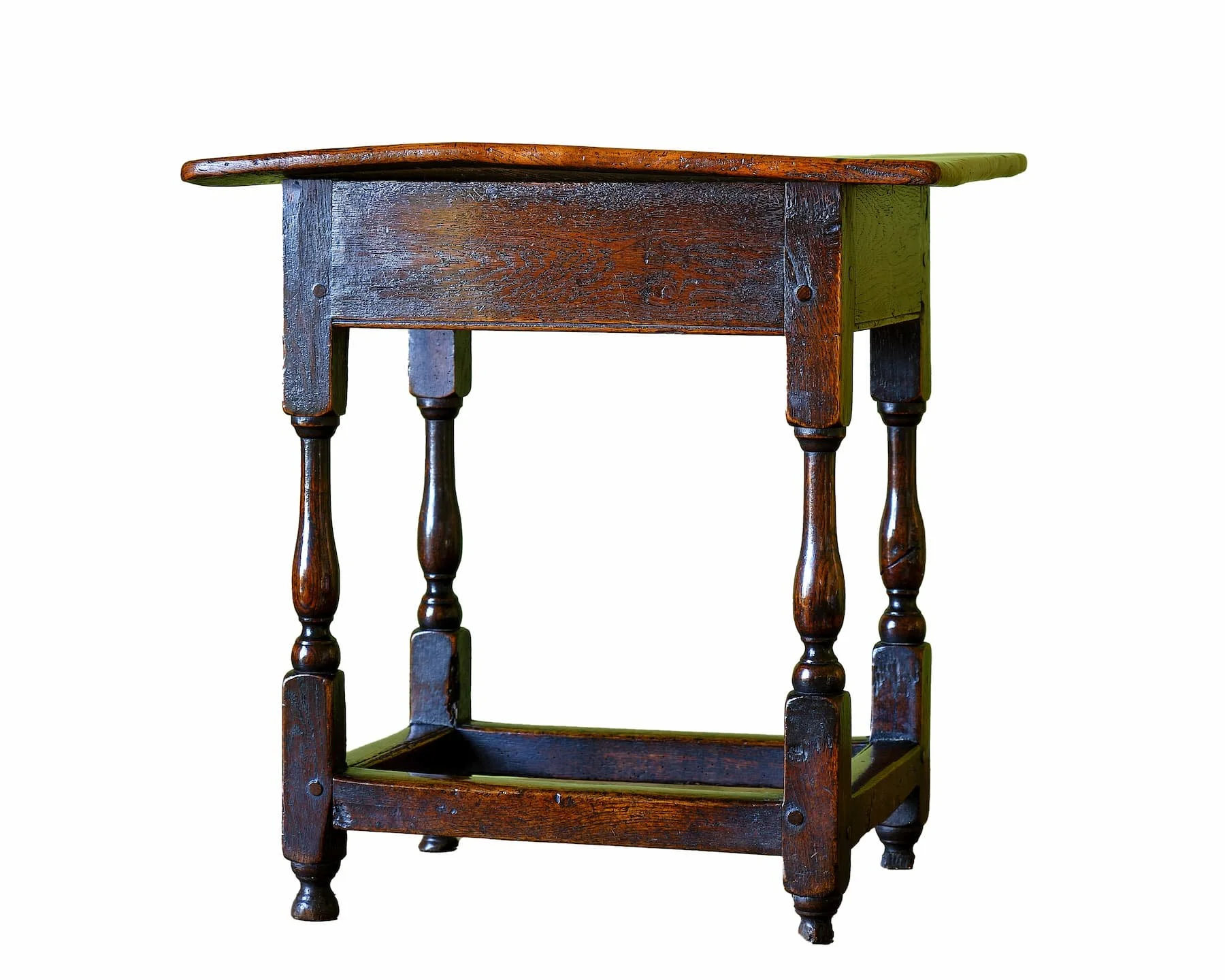
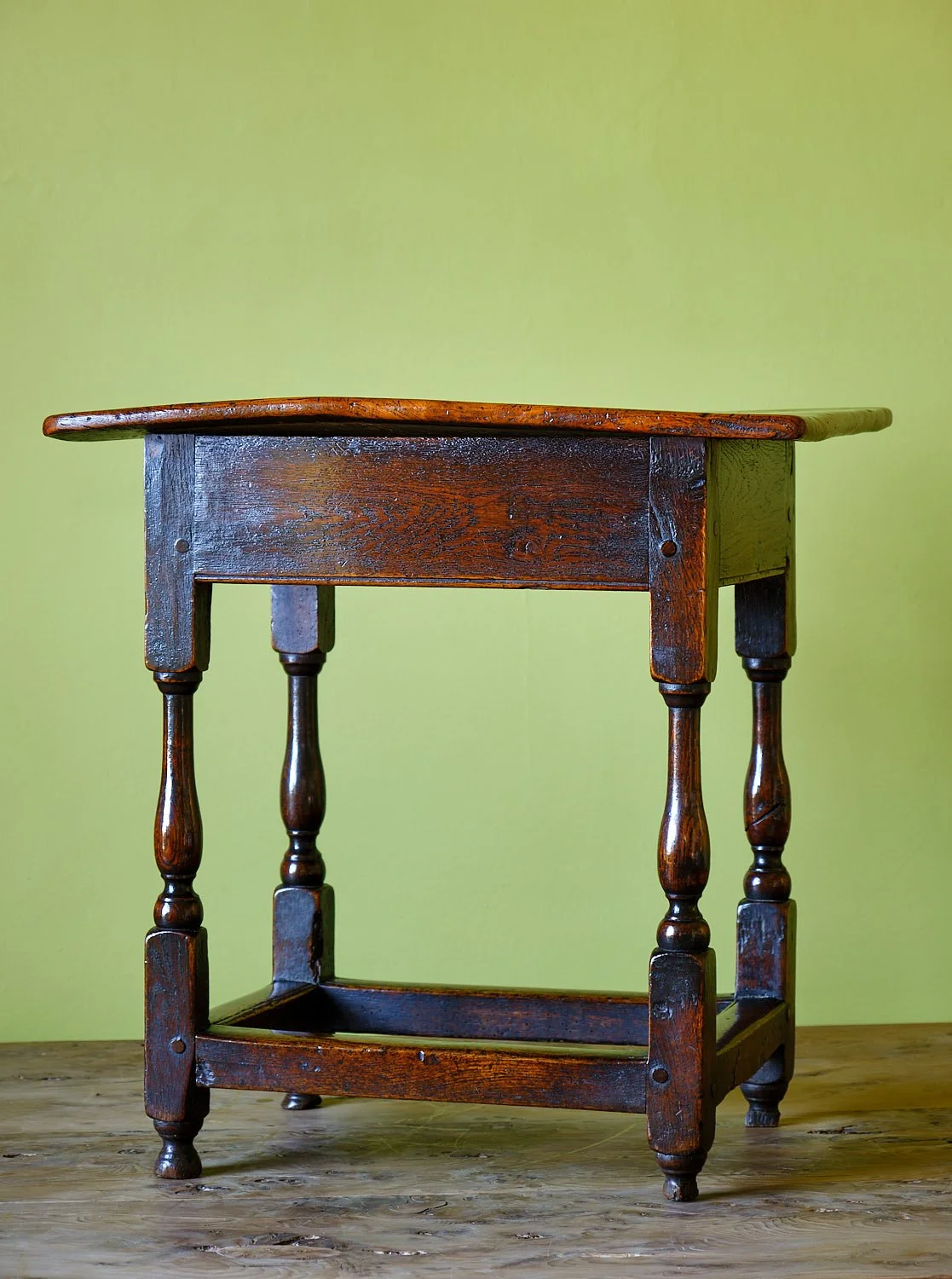
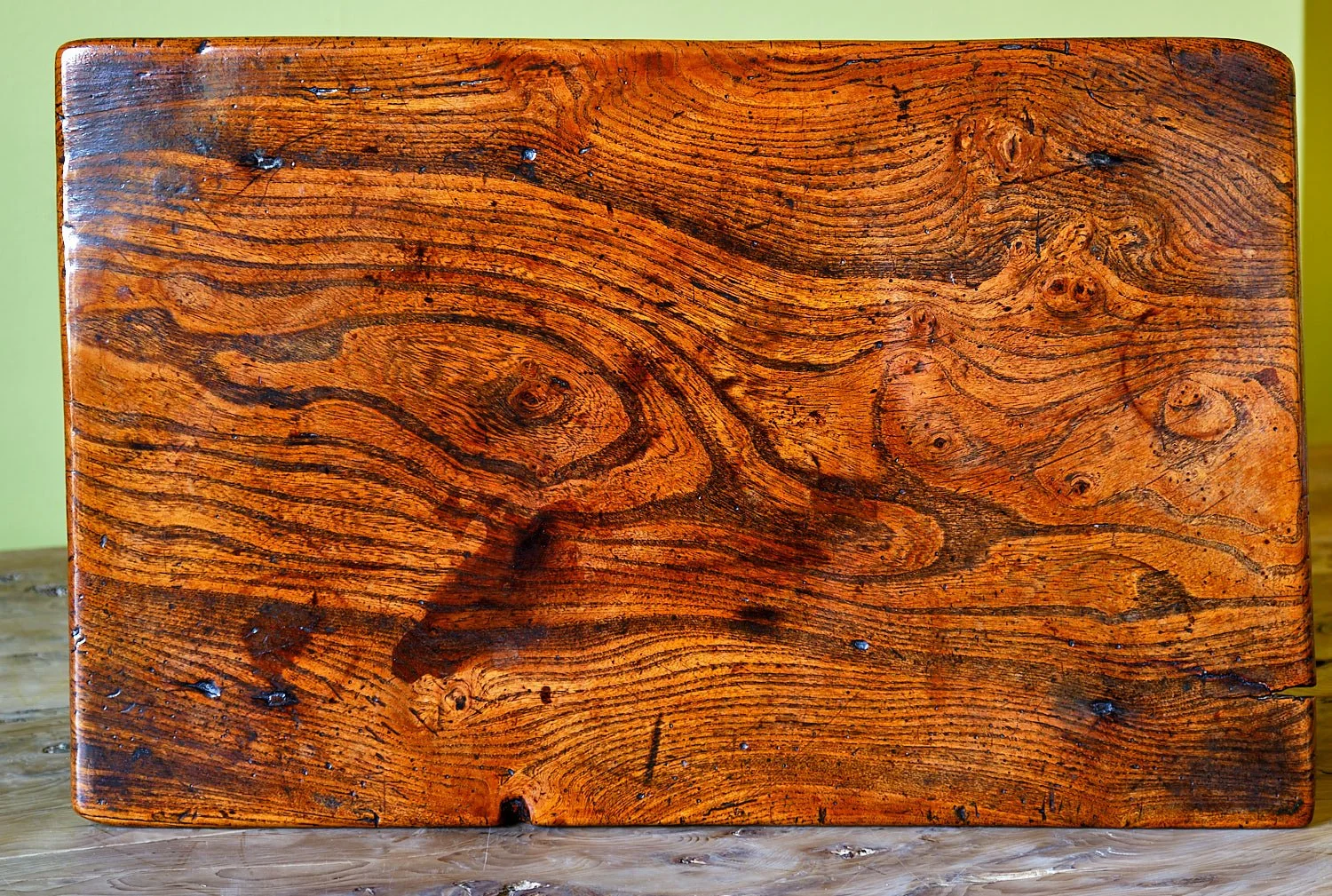
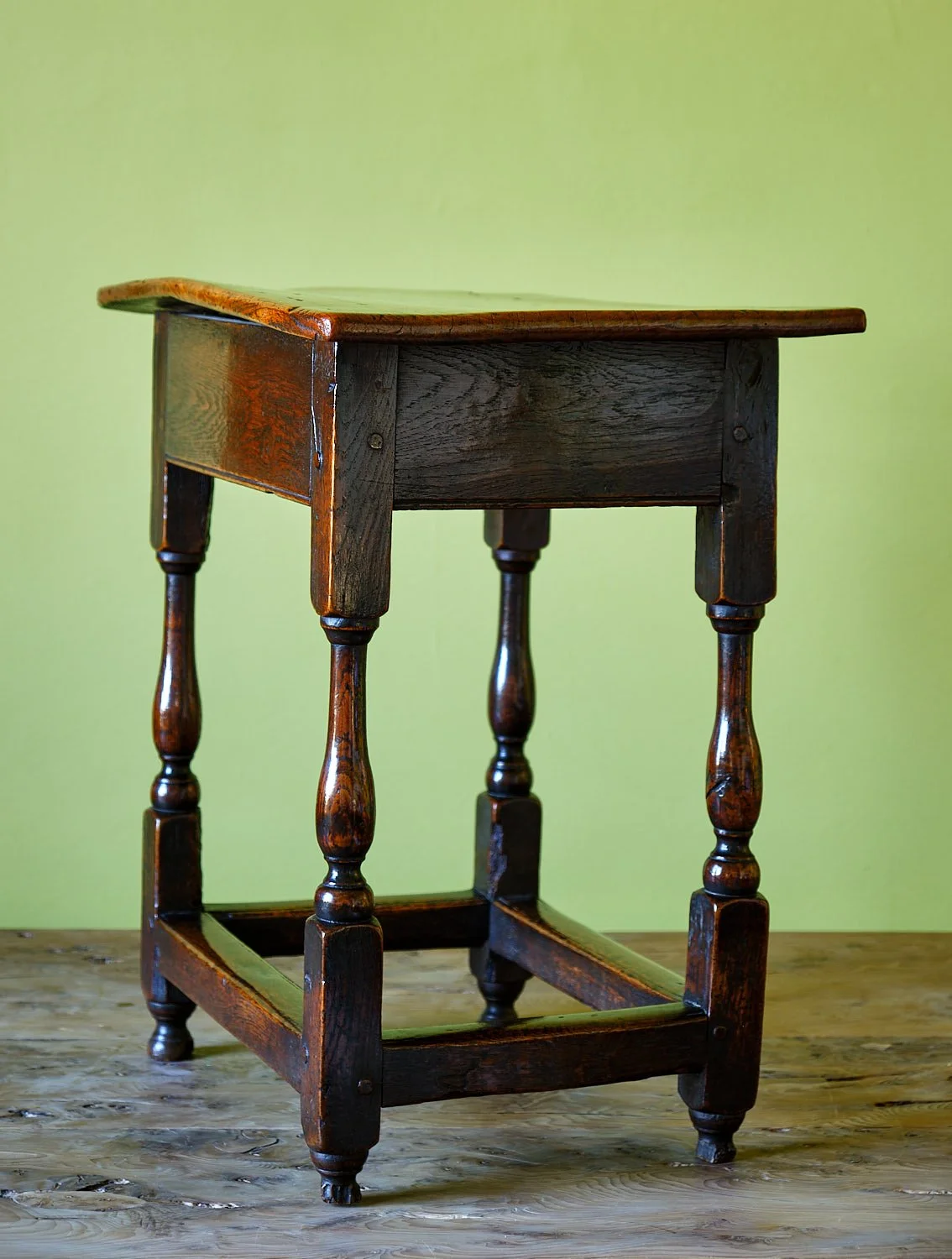
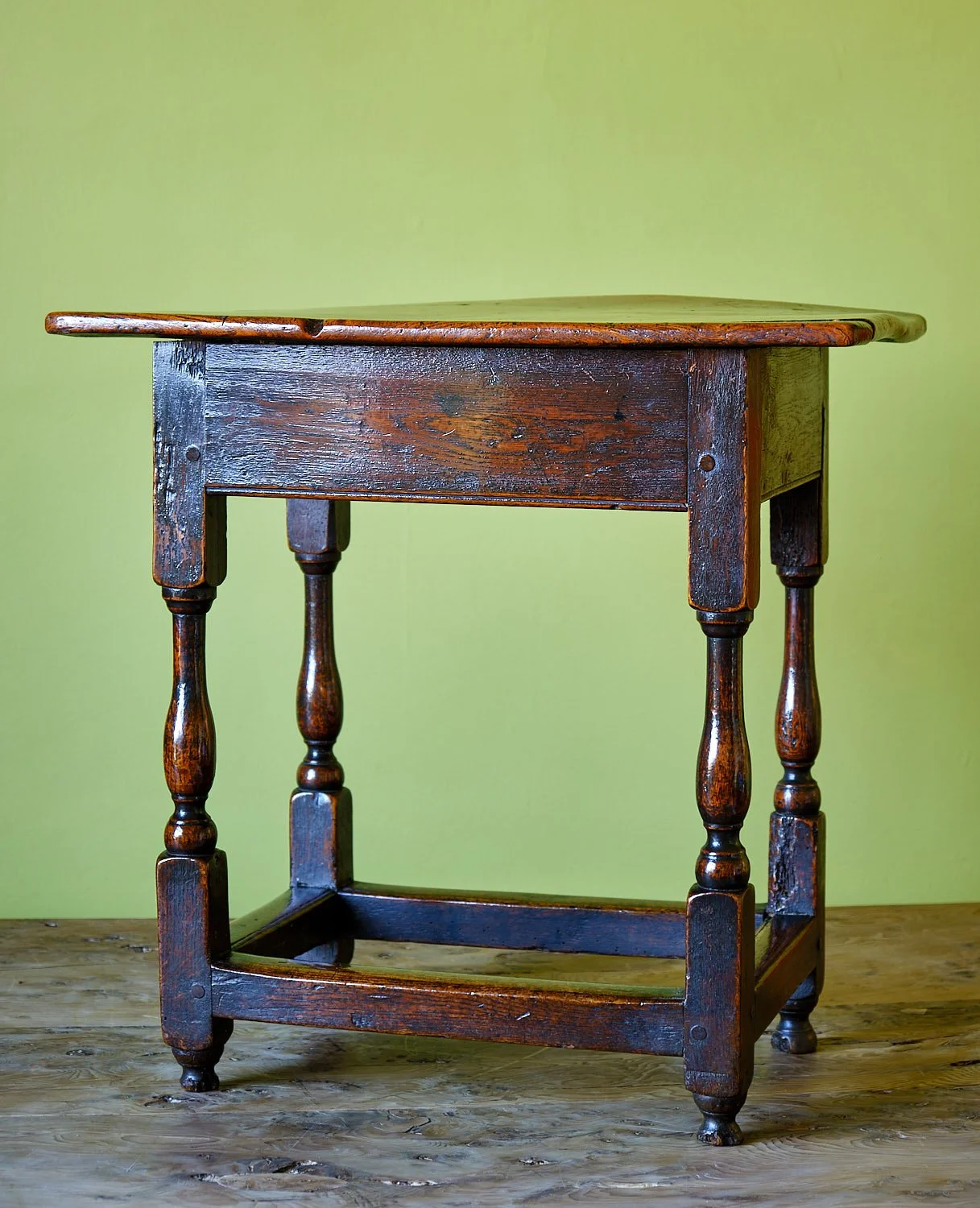
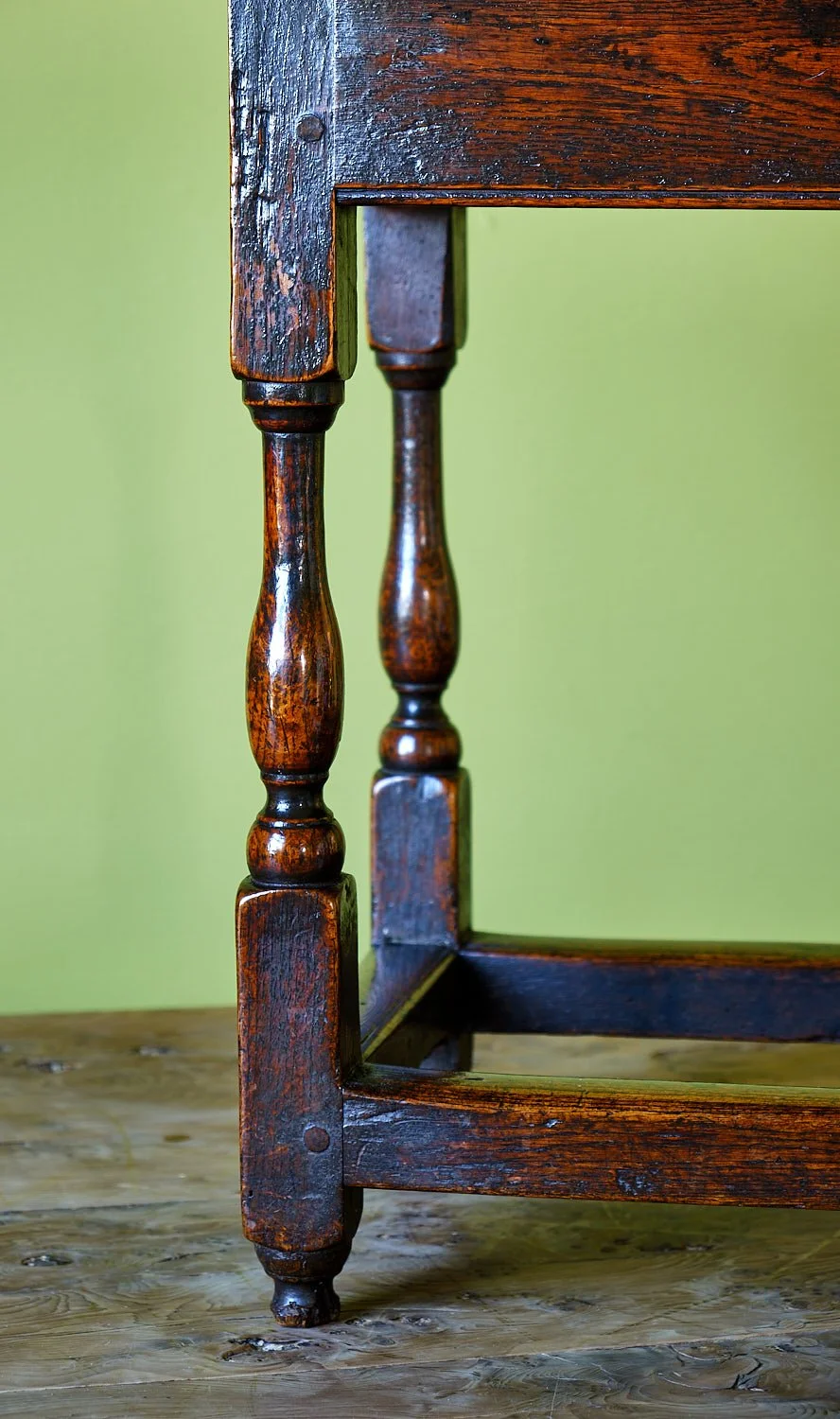
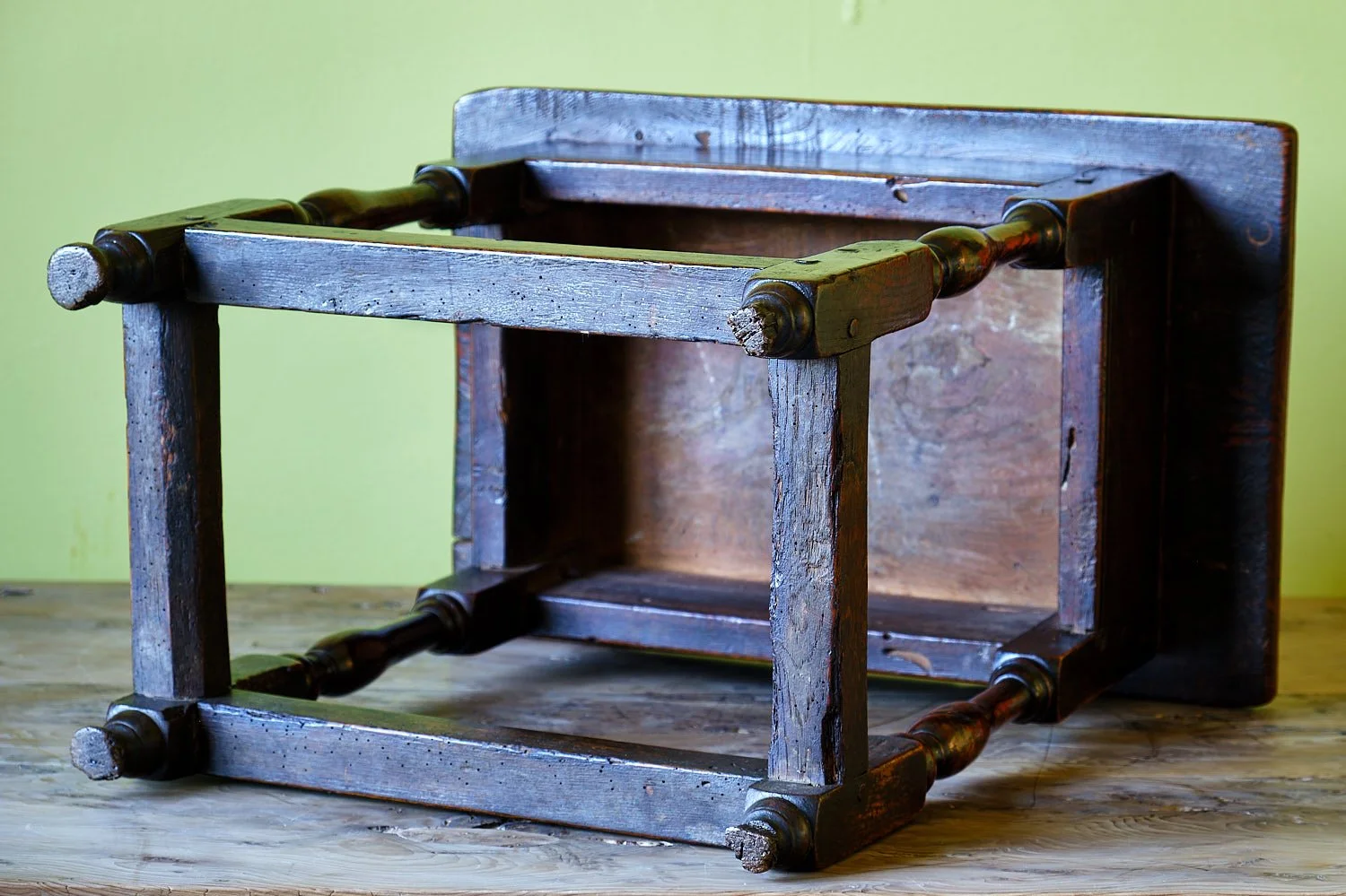
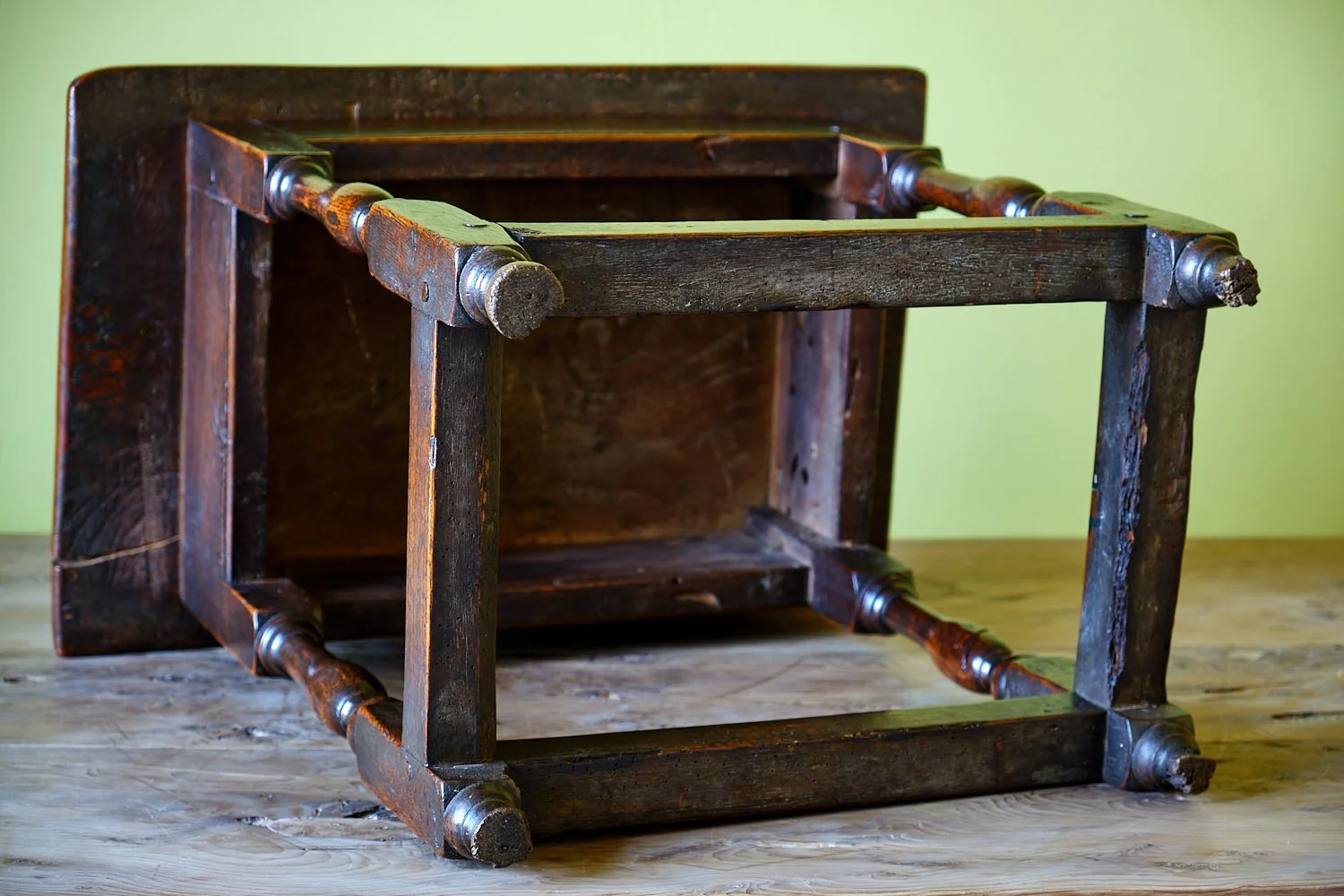
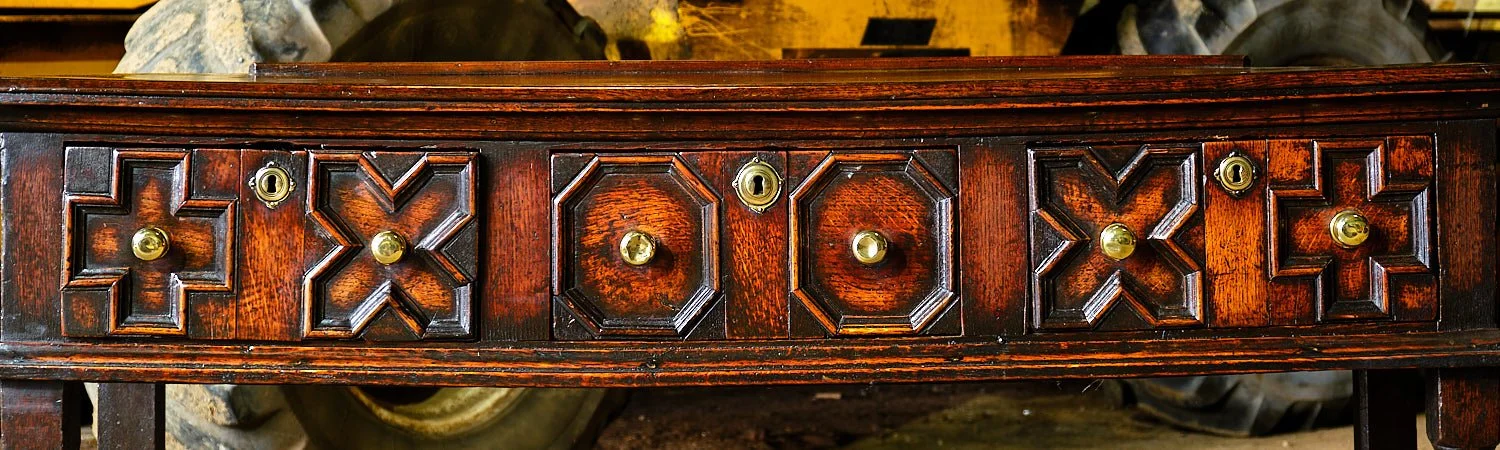
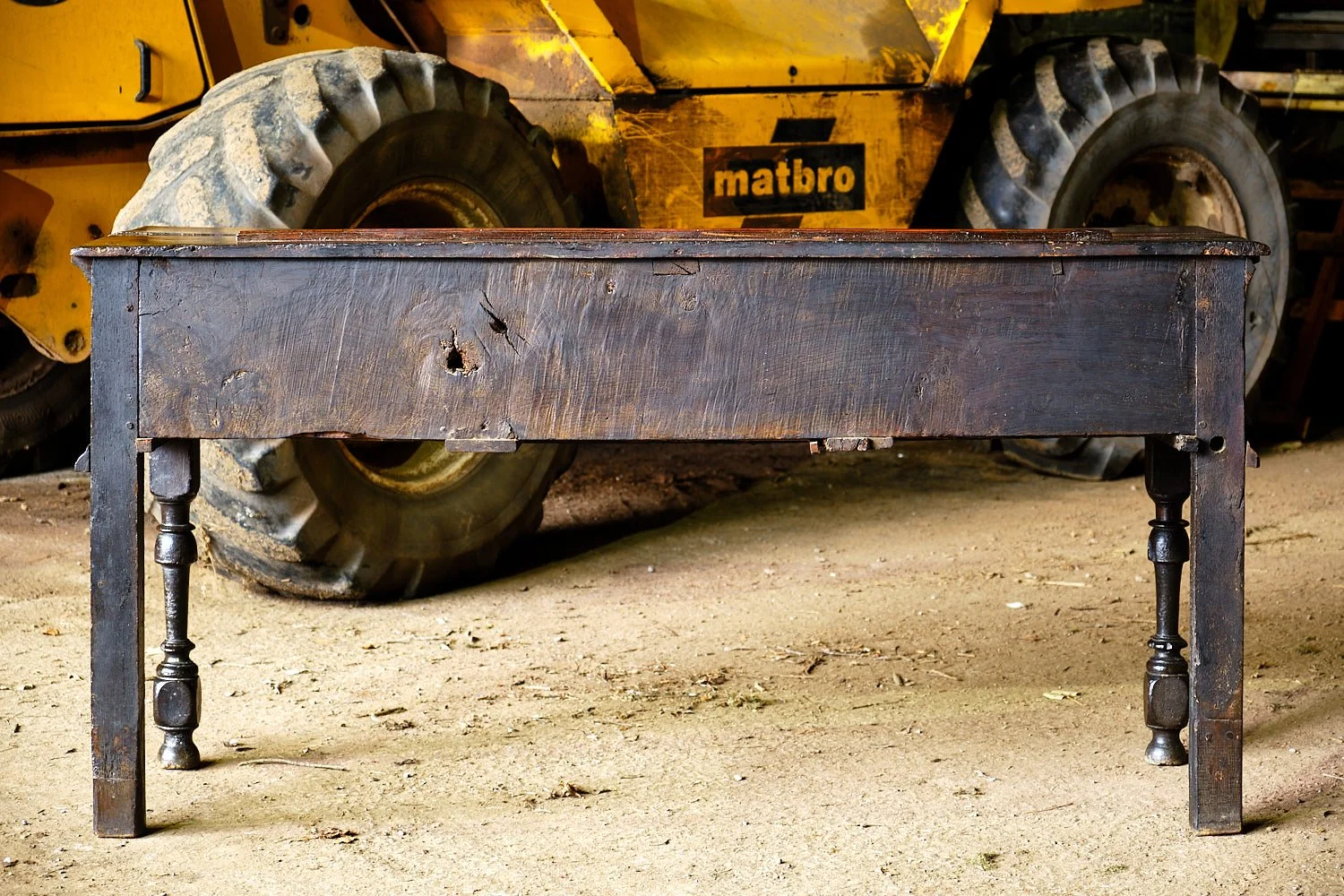
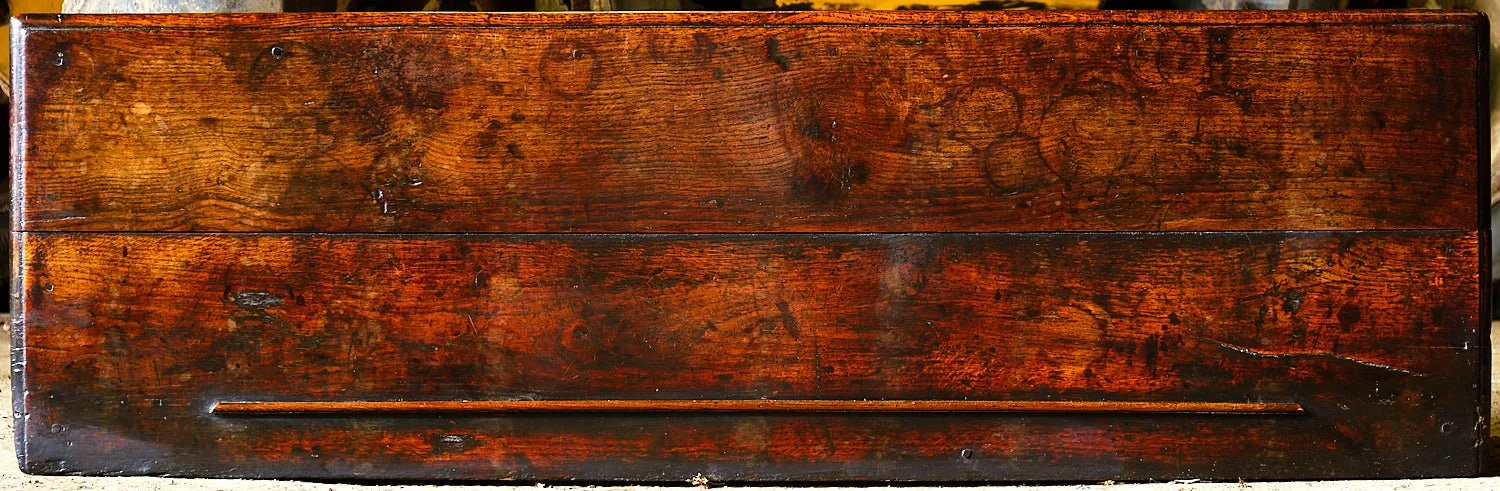
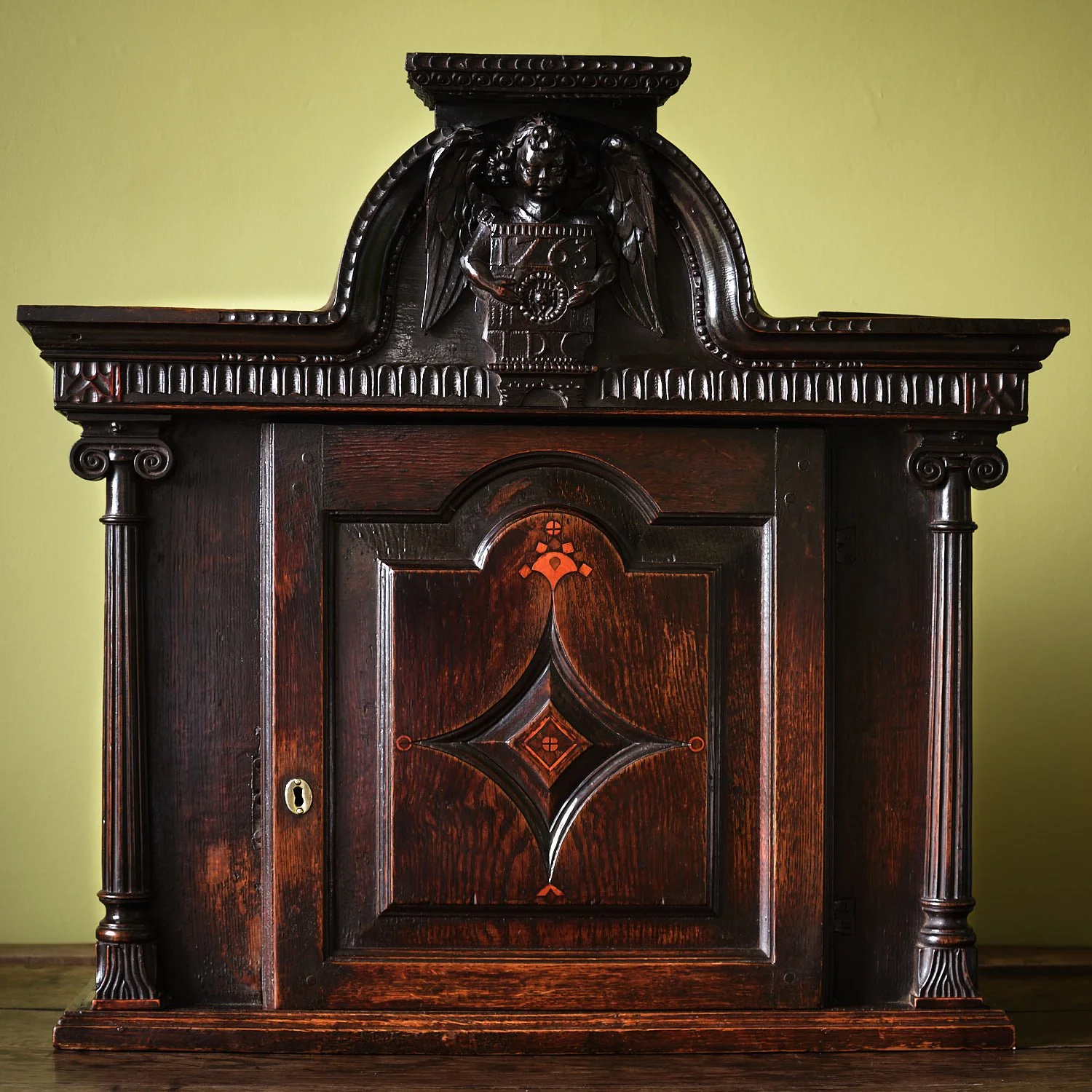
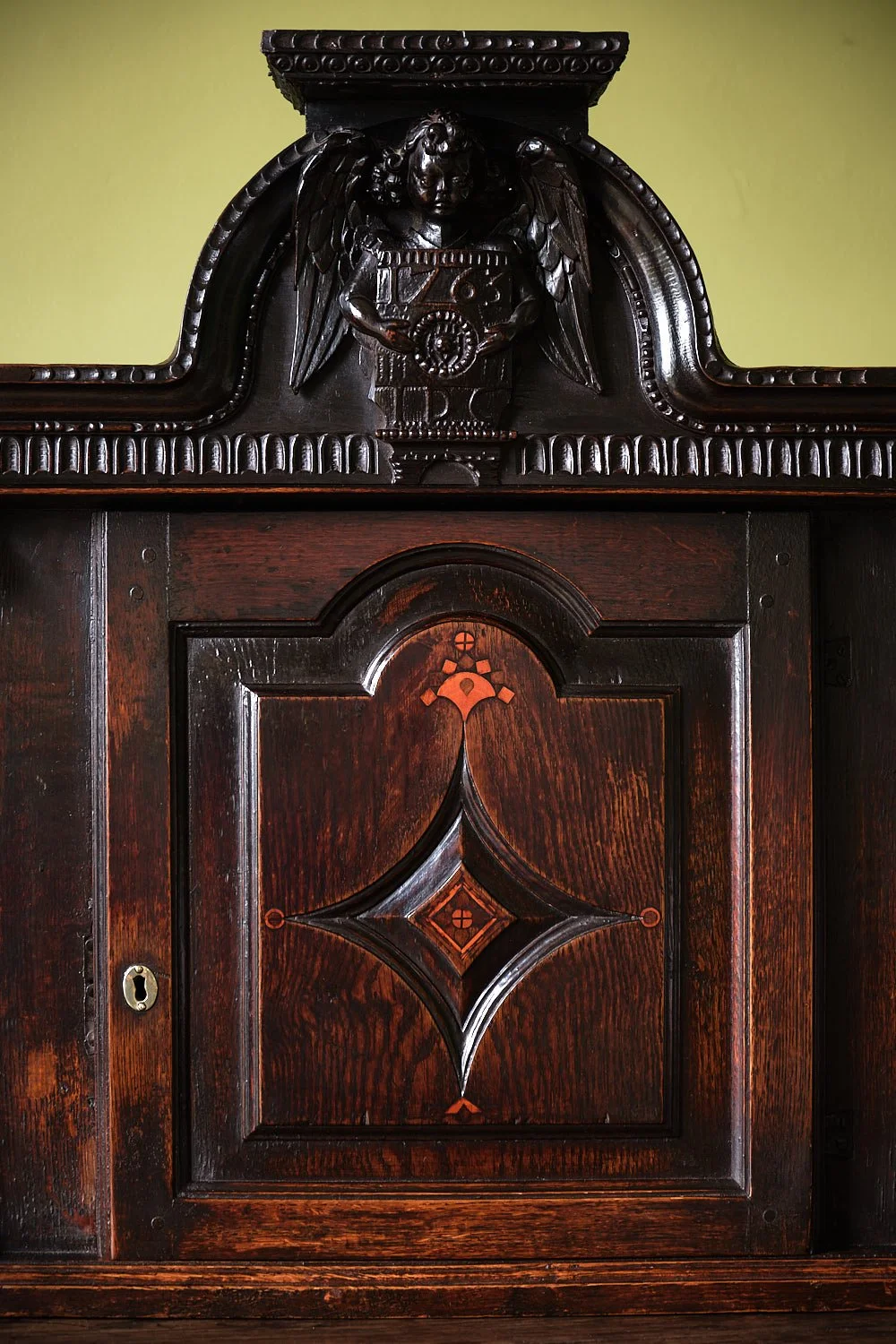
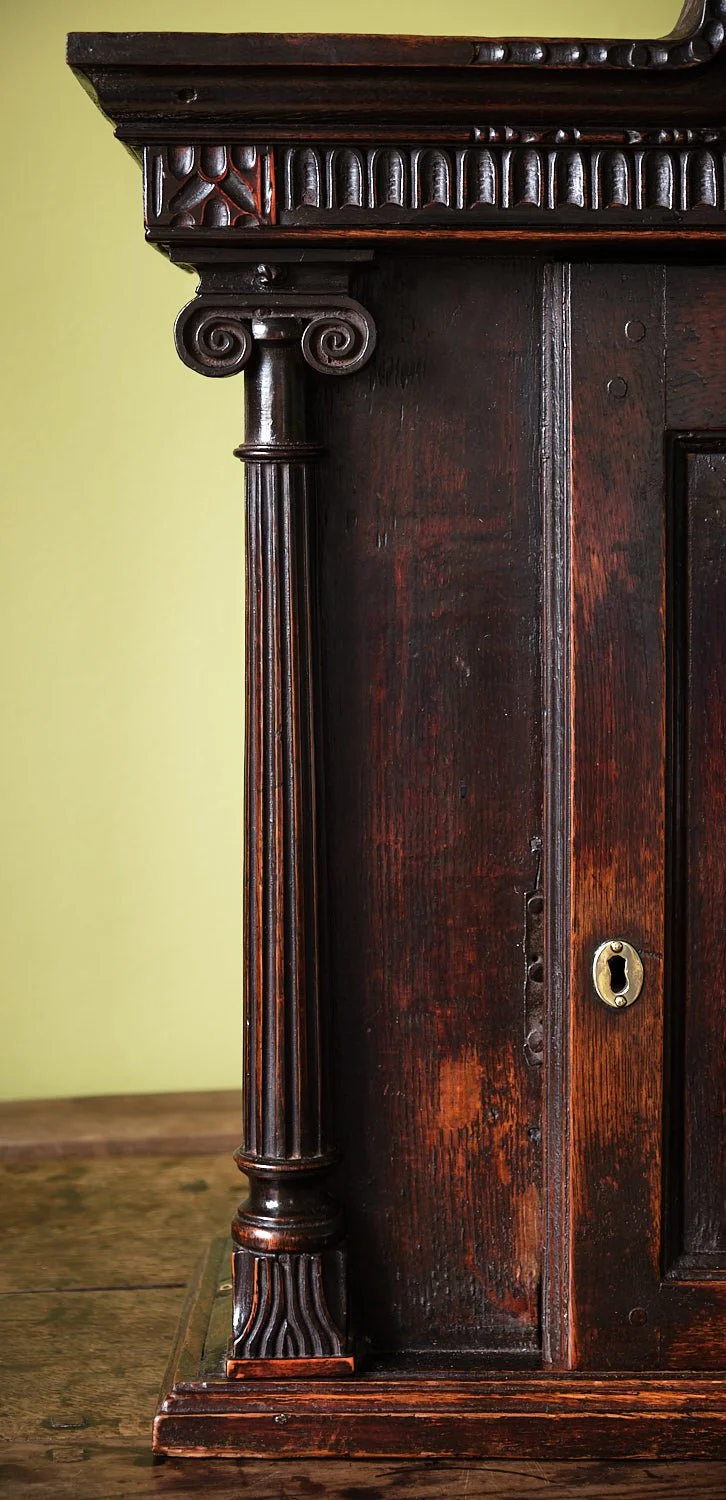
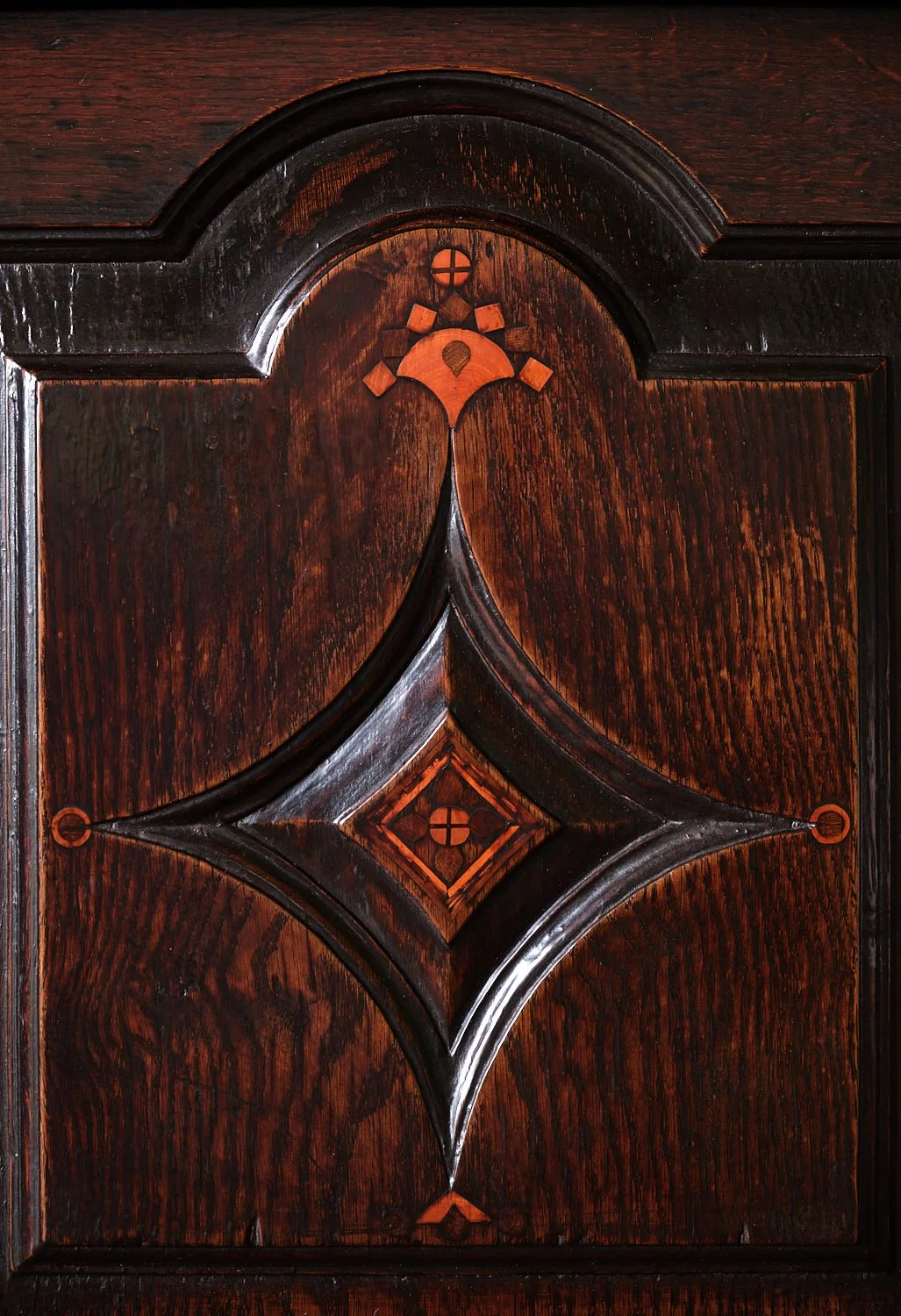
An early 17th century oak joined stool, the top with a thumb-moulded edge above a moulded edge frieze, carved on all four sides with a simple, running device, on splayed, ring-turned, columnar legs with a lower, cotton reel turning, joined by plain stretchers. The underside of the top branded with the initials SD.
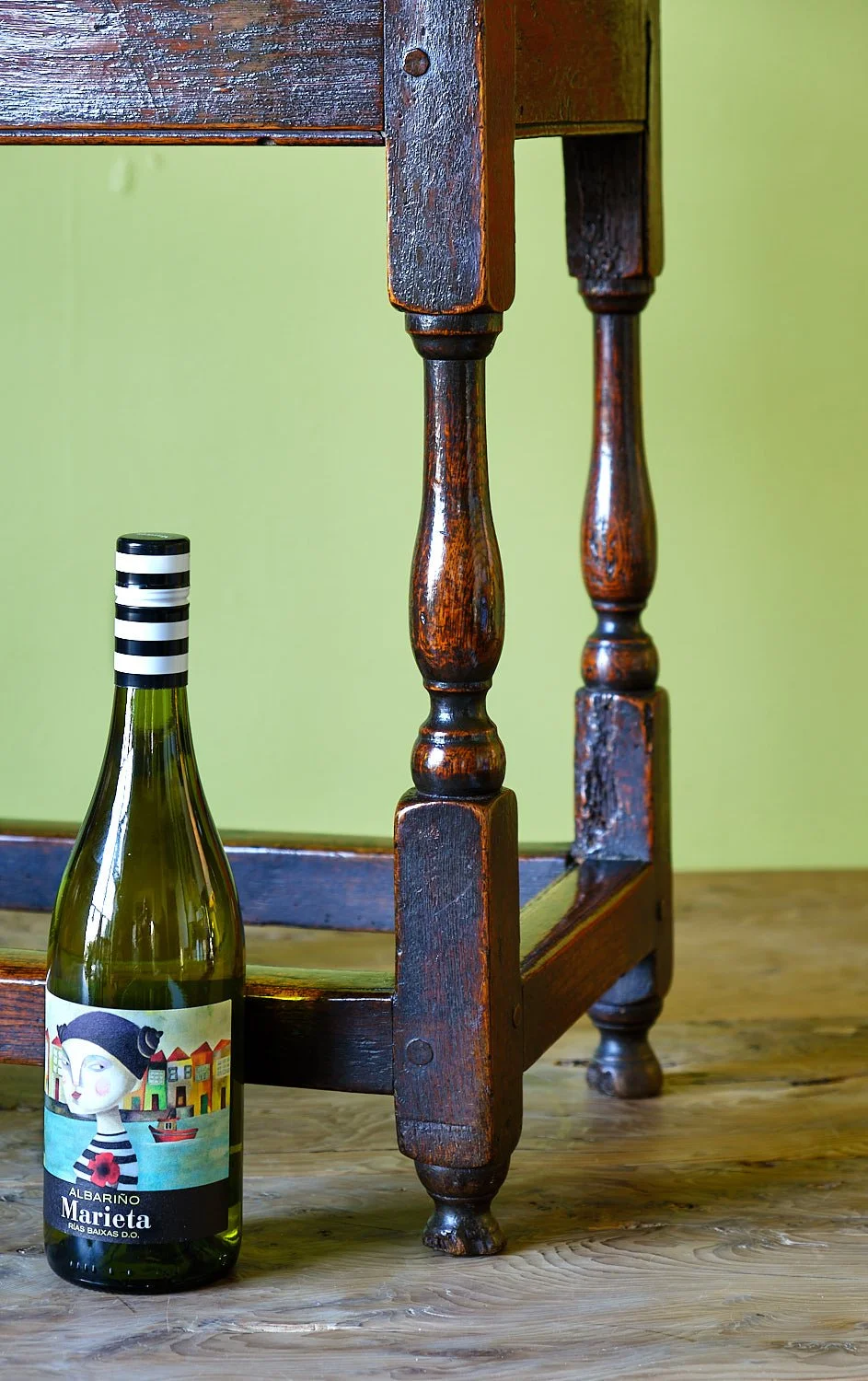
Historic split to the top and with extensive, historic worm damage, especially to the lower legs. Old repair to the outer face of one foot and a few small areas of filler to the corners of the top. However, the feet appear stable and all the stretchers appear to be original, retaining good height and with greyish brown colour.
West Country, probably Salisbury, circa 1620-1650.
Dimensions:
46 cms long, 28 cms wide, 55 cms high.
Literature:
See Oak Furniture, The British Tradition, by Victor Chinnery, figs 4:71 and 4:78 which both have similar carved friezes, and figs 4:62 and fig ixa, page 568, which have similar, turned legs. All these, Chinnery ascribes to early 17th century Salisbury.
See also Early British Chairs and Seats, 1500 -1700 by Tobias Jellinek, plates 287, 299 and 307, which show stools with similar turning to the legs, 307 described as “ sausage and cotton reel” turnings.
An early 17th century oak joined stool, the top with a thumb-moulded edge above a moulded edge frieze, carved on all four sides with a simple, running device, on splayed, ring-turned, columnar legs with a lower, cotton reel turning, joined by plain stretchers. The underside of the top branded with the initials SD.
Historic split to the top and with extensive, historic worm damage, especially to the lower legs. Old repair to the outer face of one foot and a few small areas of filler to the corners of the top. However, the feet appear stable and all the stretchers appear to be original, retaining good height and with greyish brown colour.
West Country, probably Salisbury, circa 1620-1650.
Dimensions:
46 cms long, 28 cms wide, 55 cms high.
Literature:
See Oak Furniture, The British Tradition, by Victor Chinnery, figs 4:71 and 4:78 which both have similar carved friezes, and figs 4:62 and fig ixa, page 568, which have similar, turned legs. All these, Chinnery ascribes to early 17th century Salisbury.
See also Early British Chairs and Seats, 1500 -1700 by Tobias Jellinek, plates 287, 299 and 307, which show stools with similar turning to the legs, 307 described as “ sausage and cotton reel” turnings.
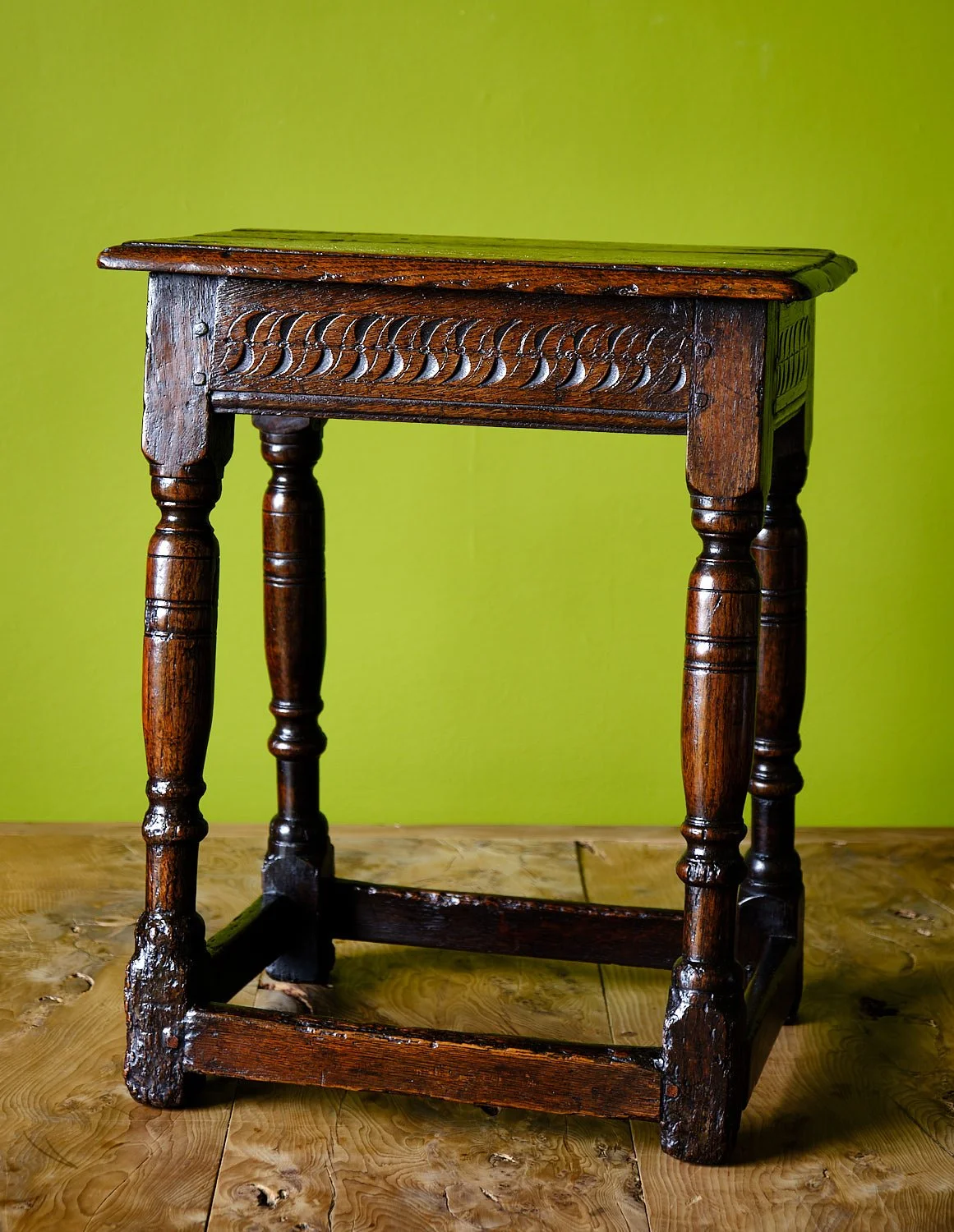 Image 1 of 7
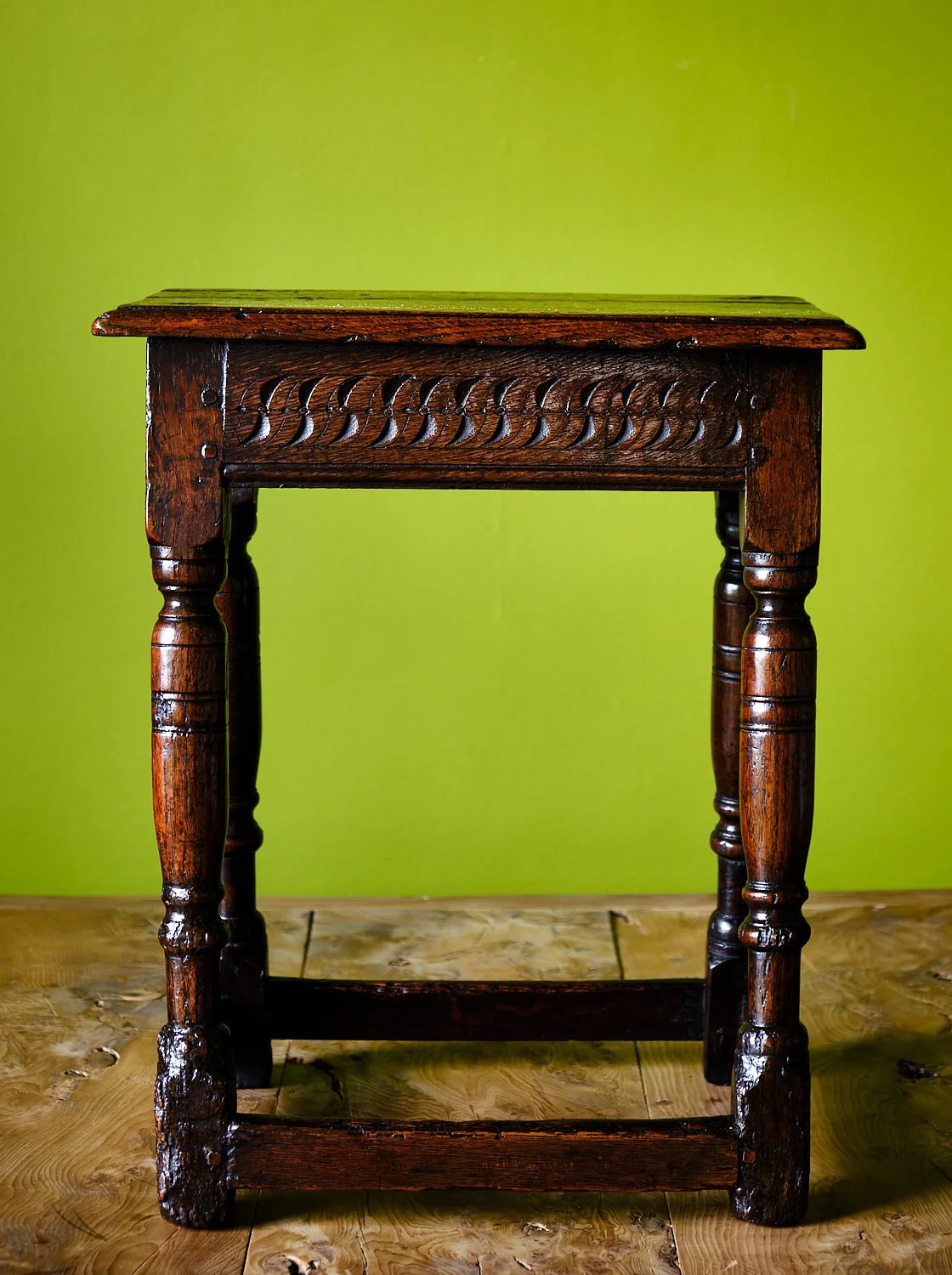 Image 2 of 7
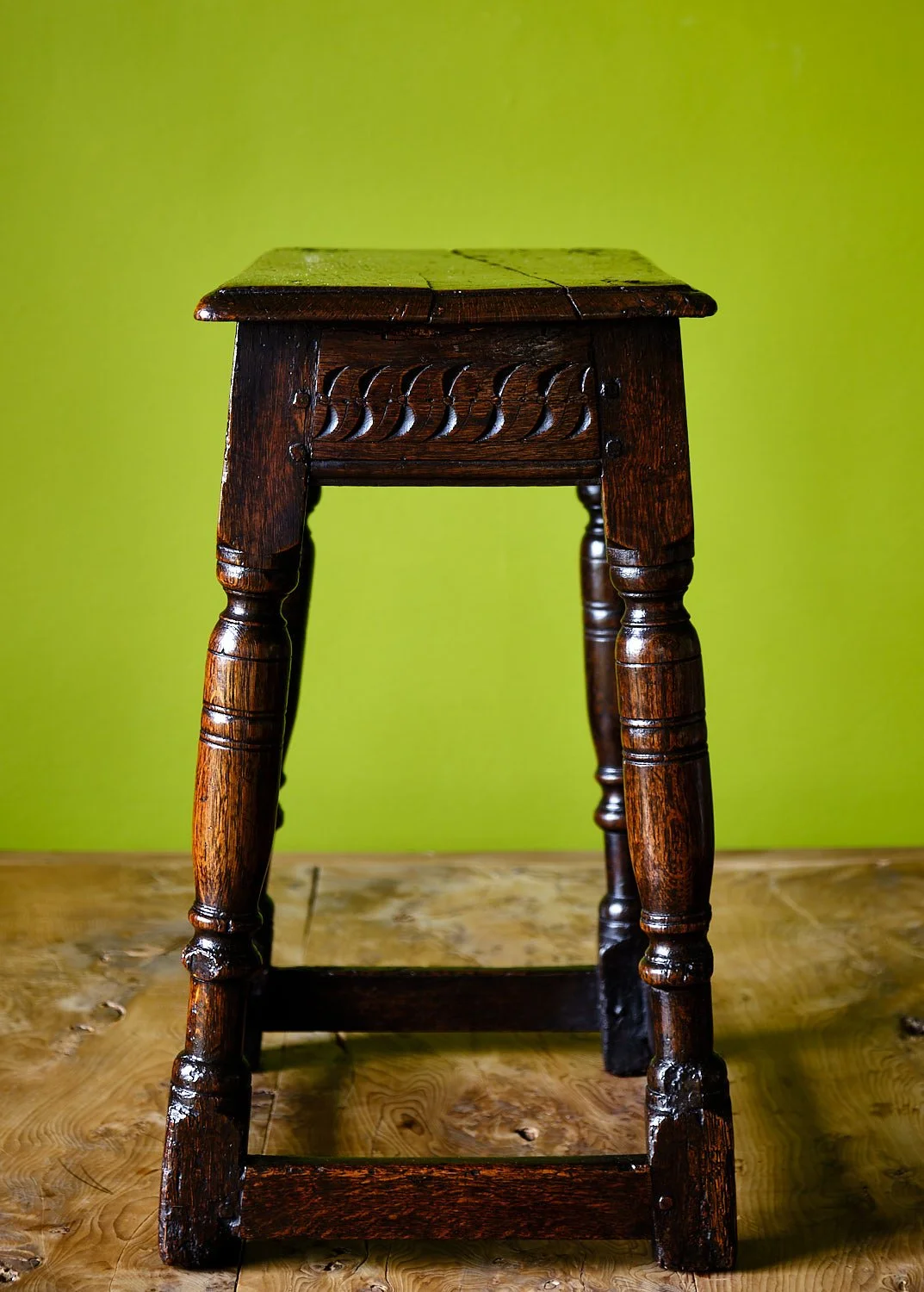 Image 3 of 7
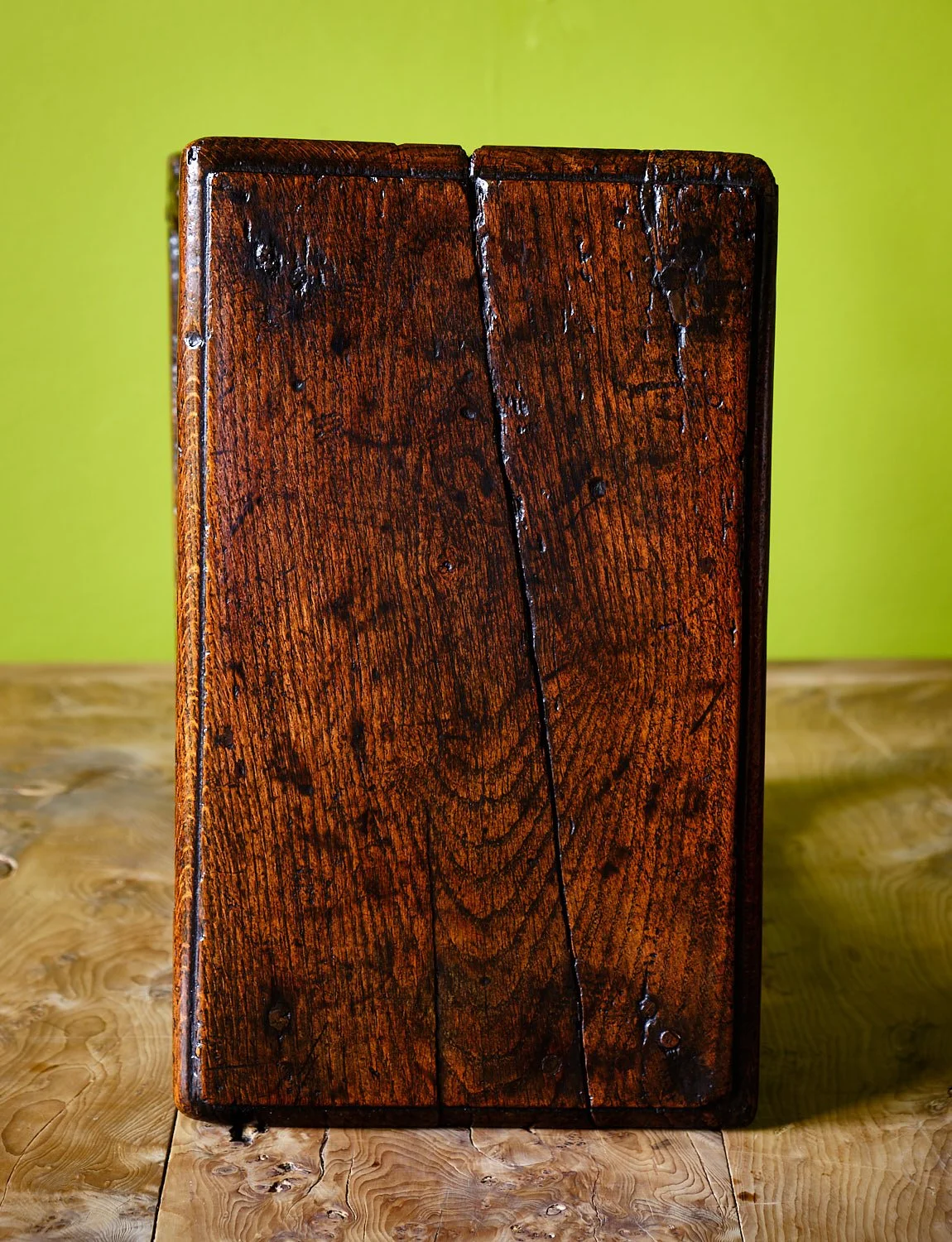 Image 4 of 7
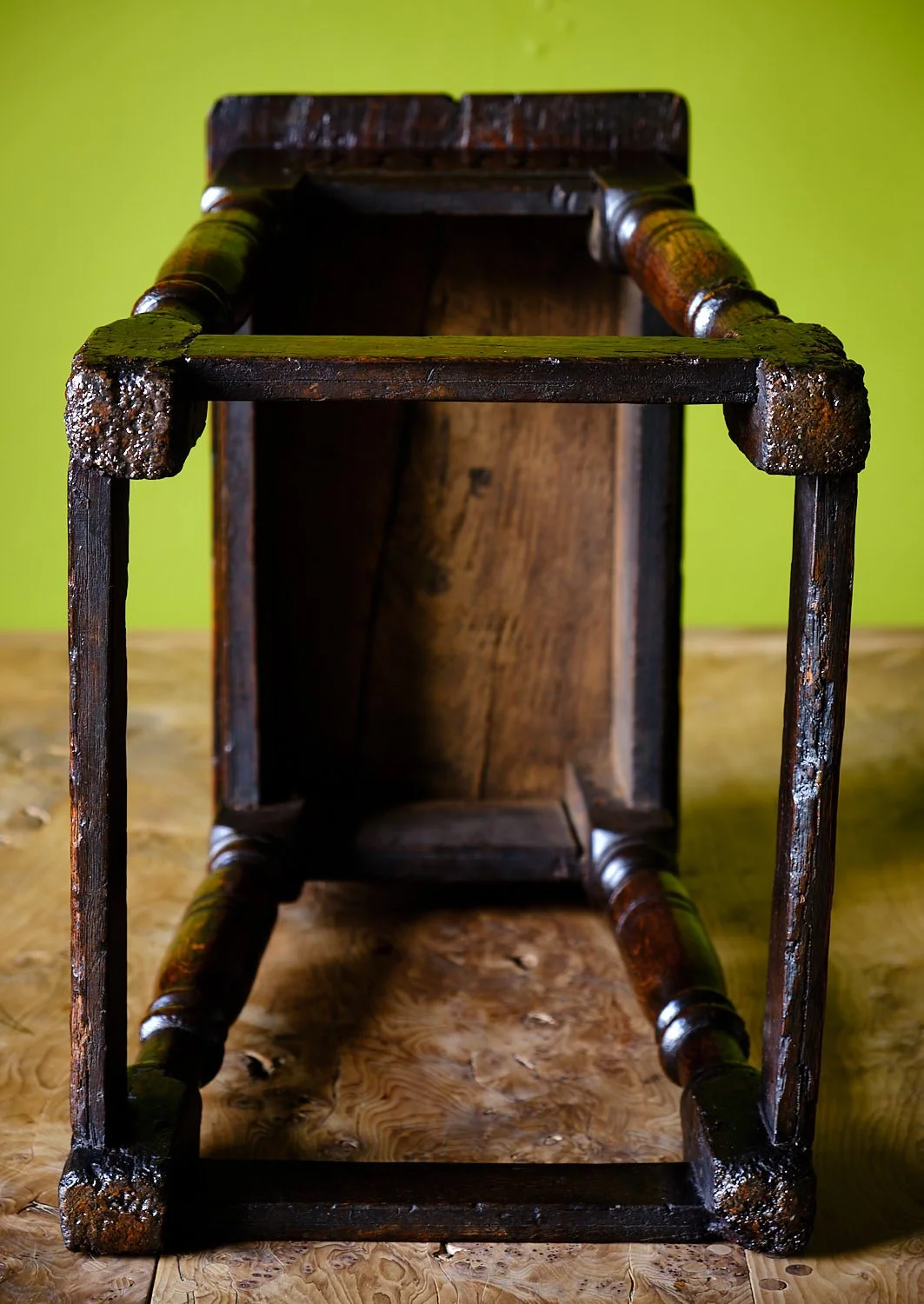 Image 5 of 7
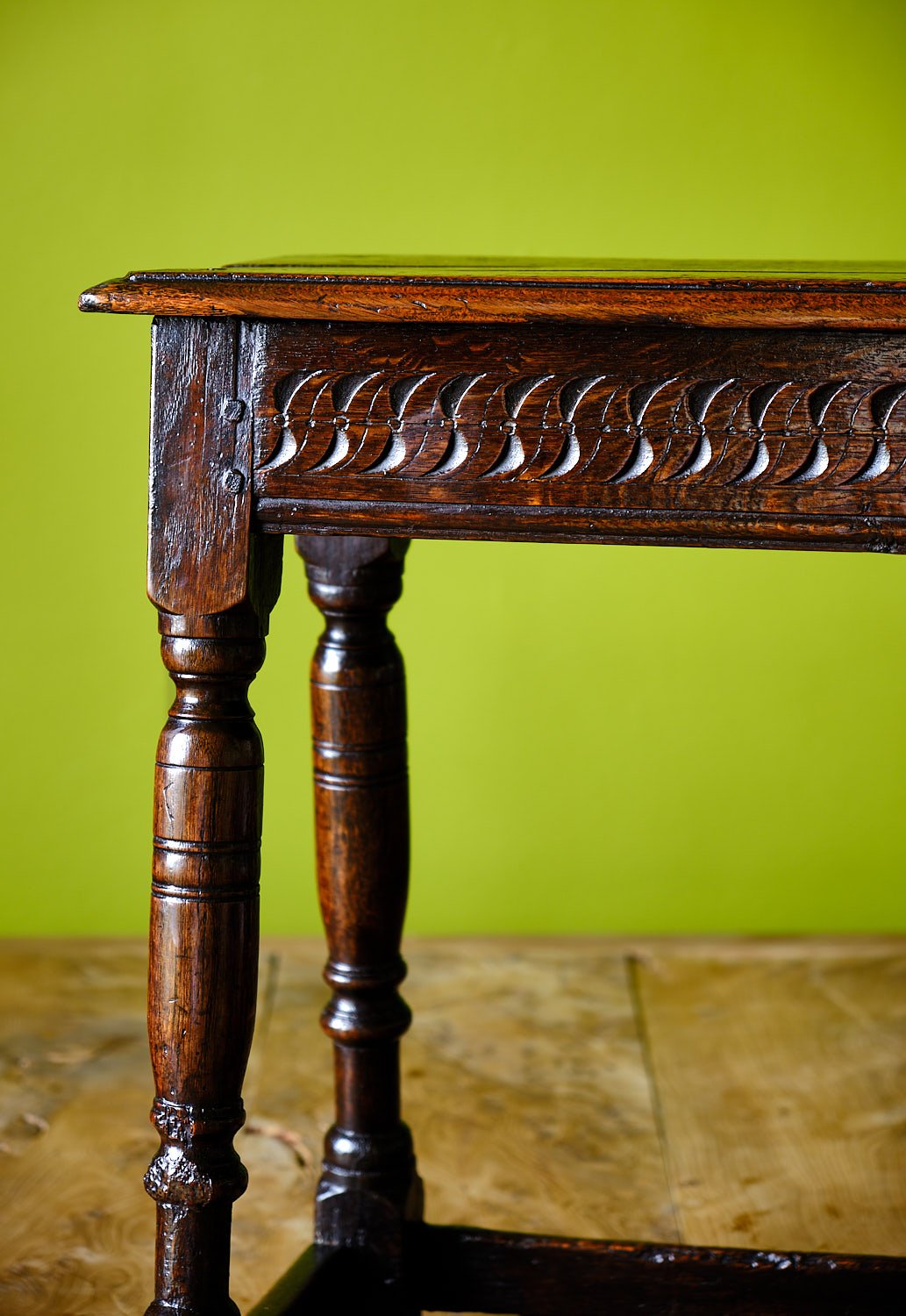 Image 6 of 7
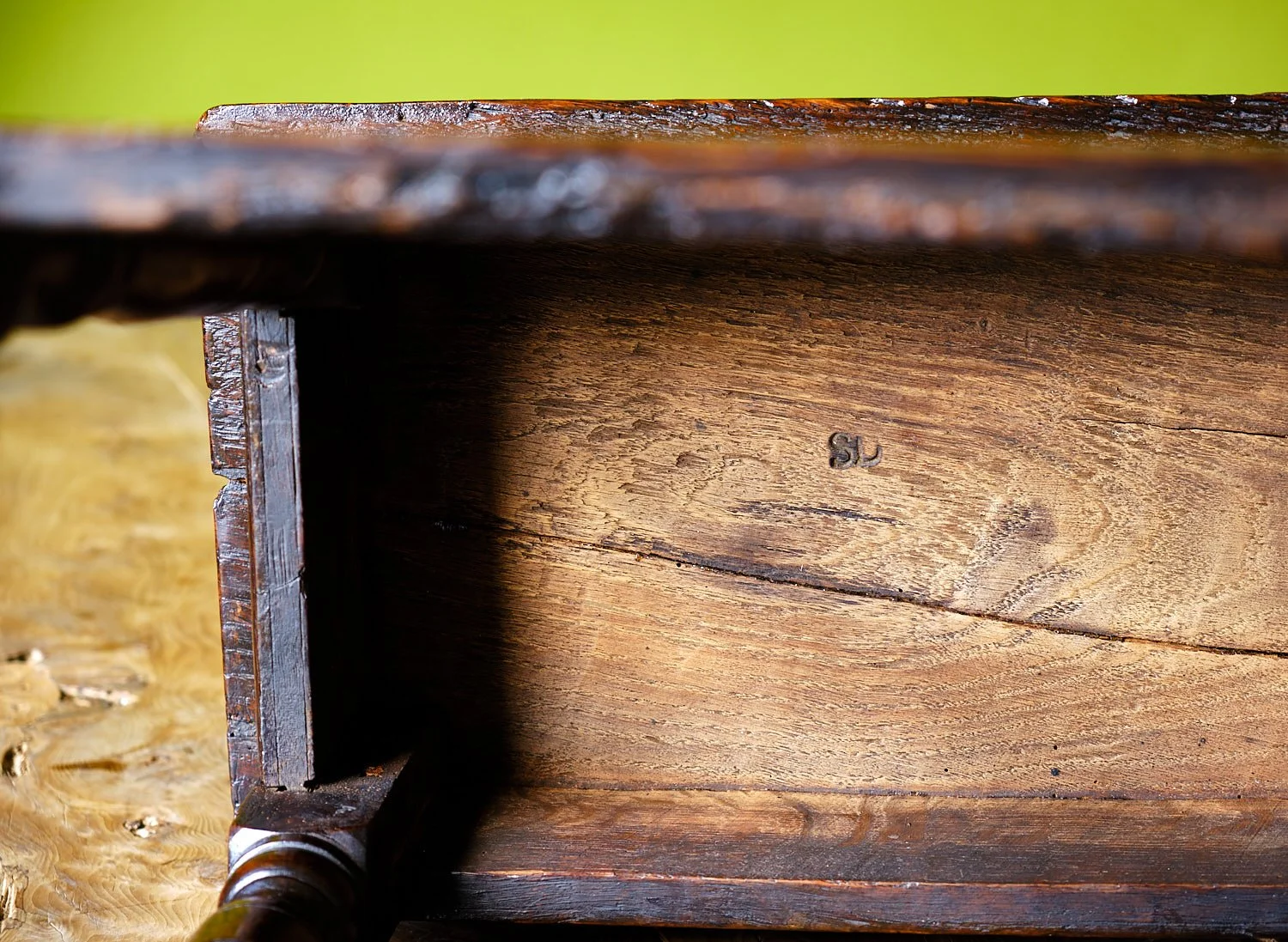 Image 7 of 7