A substantial and well patinated oak joined stool. The single piece, pegged top has a thumb nail moulded edge above a shallow frieze, plain with a moulded edge at each end, the side rails with bicuspid shaping.
The splayed, inverted baluster, ring and cotton reel-turned legs are joined by plain stretchers.
Whilst the underside of the feet confirm the stool originally had turned toes, it retains a generous height.
Richly patinated, especially the base with colours ranging from deep brown through to almost black.
West Country, circa 1650-1680.
Dimensions:
46 cms long, 28 cms wide, 53 cms high.
Literature:
See Oak Furniture, The British Tradition, by Victor Chinnery, fig 4:62, a stool with similar leg profile, which Chinnery ascribes to Salisbury.
See also Early British Chairs and Seats, 1500 -1700 by Tobias Jellinek, plates 287, 299 and 307, which show stools with similar turning to the legs, 307 described as “ sausage and cotton reel” turnings.
A substantial and well patinated oak joined stool. The single piece, pegged top has a thumb nail moulded edge above a shallow frieze, plain with a moulded edge at each end, the side rails with bicuspid shaping.
The splayed, inverted baluster, ring and cotton reel-turned legs are joined by plain stretchers.
Whilst the underside of the feet confirm the stool originally had turned toes, it retains a generous height.
Richly patinated, especially the base with colours ranging from deep brown through to almost black.
West Country, circa 1650-1680.
Dimensions:
46 cms long, 28 cms wide, 53 cms high.
Literature:
See Oak Furniture, The British Tradition, by Victor Chinnery, fig 4:62, a stool with similar leg profile, which Chinnery ascribes to Salisbury.
See also Early British Chairs and Seats, 1500 -1700 by Tobias Jellinek, plates 287, 299 and 307, which show stools with similar turning to the legs, 307 described as “ sausage and cotton reel” turnings.
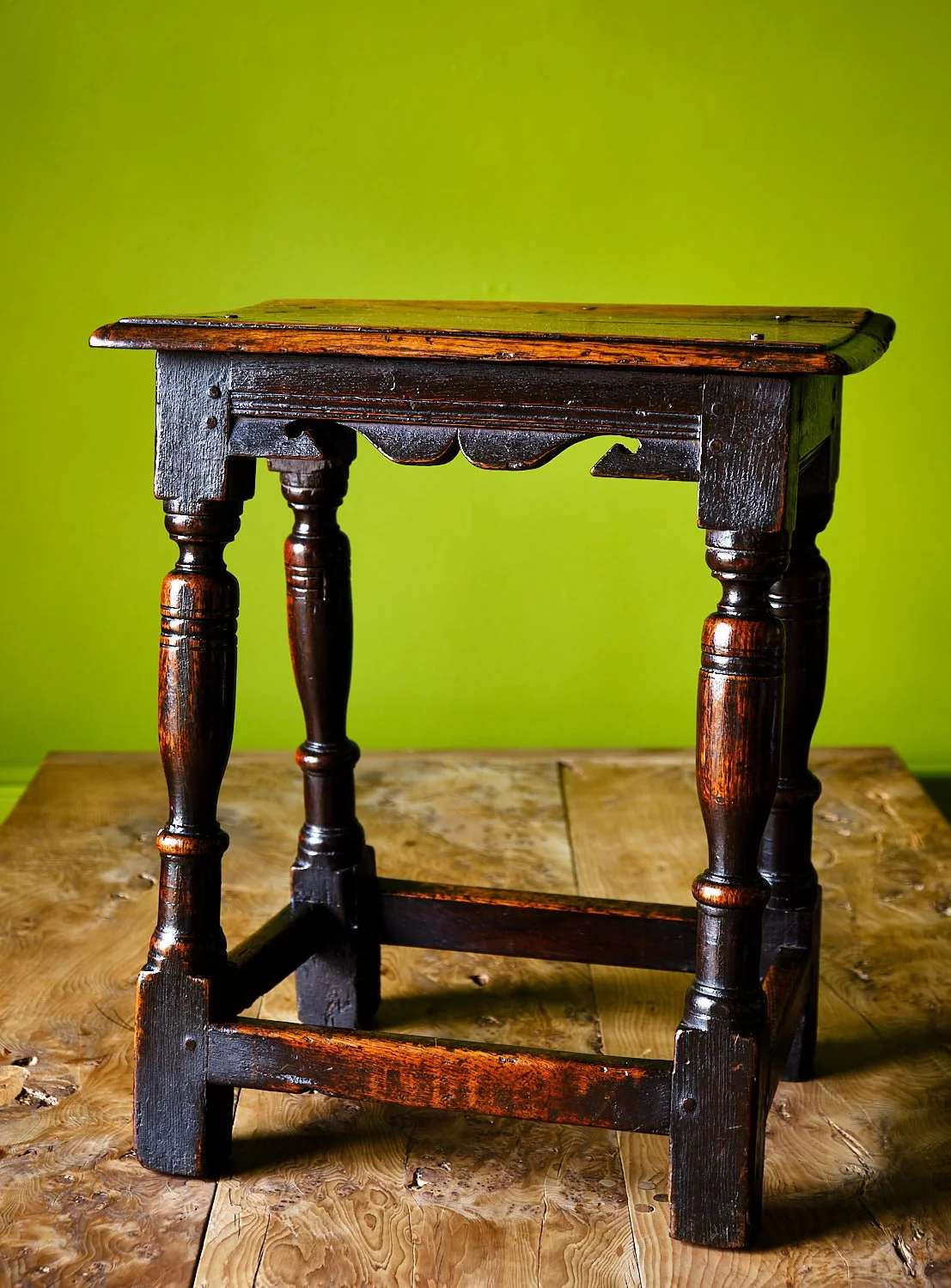 Image 1 of 9
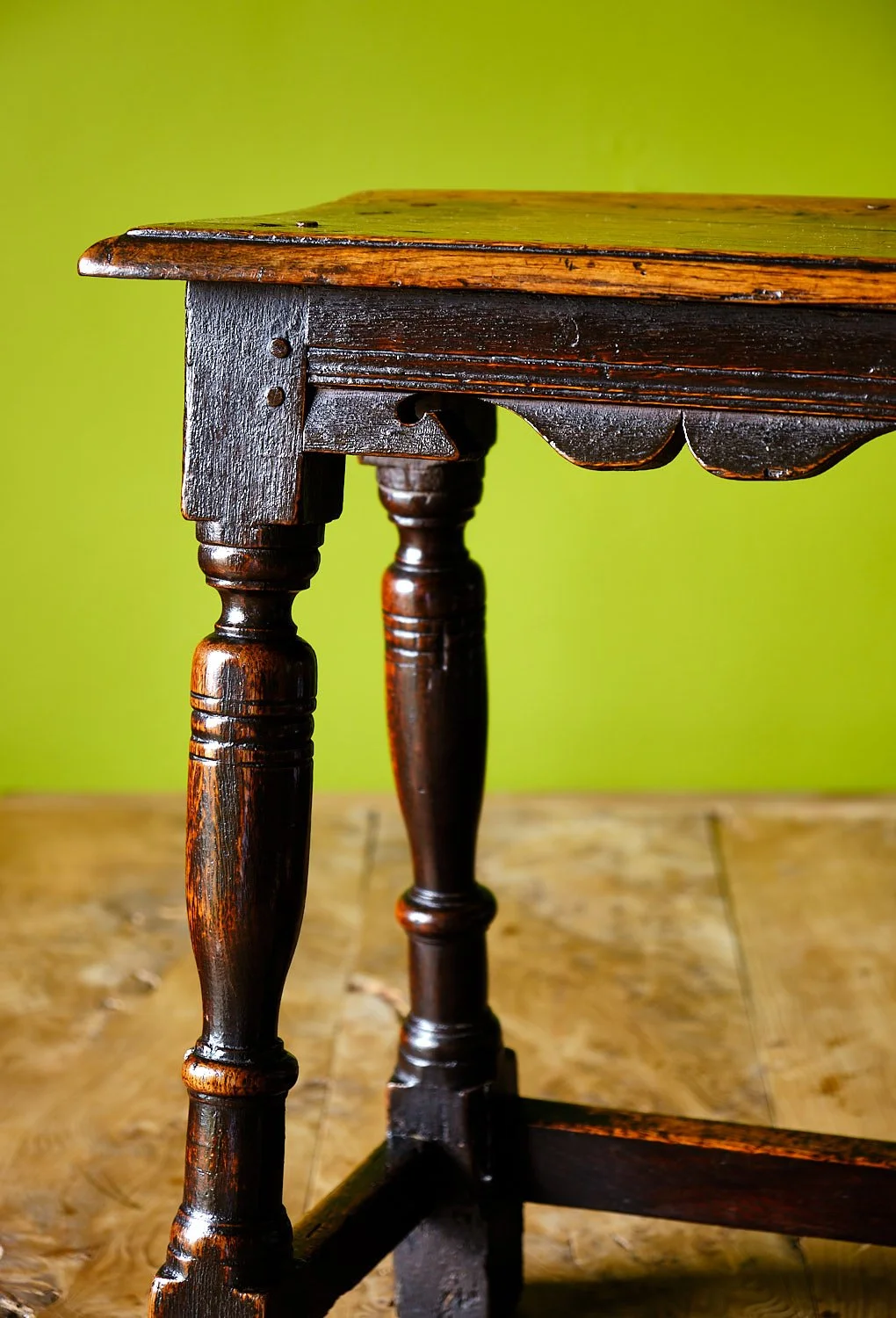 Image 2 of 9
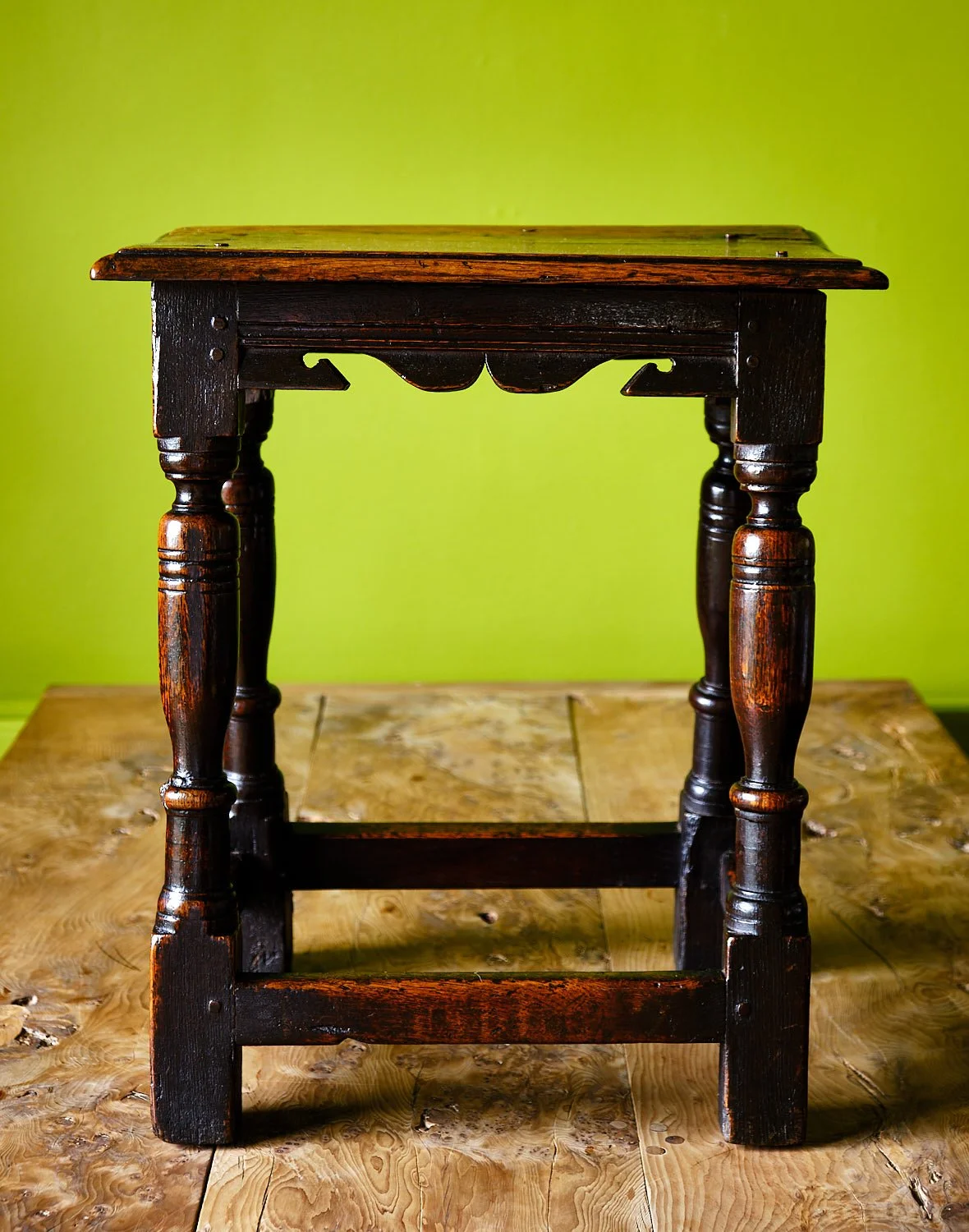 Image 3 of 9
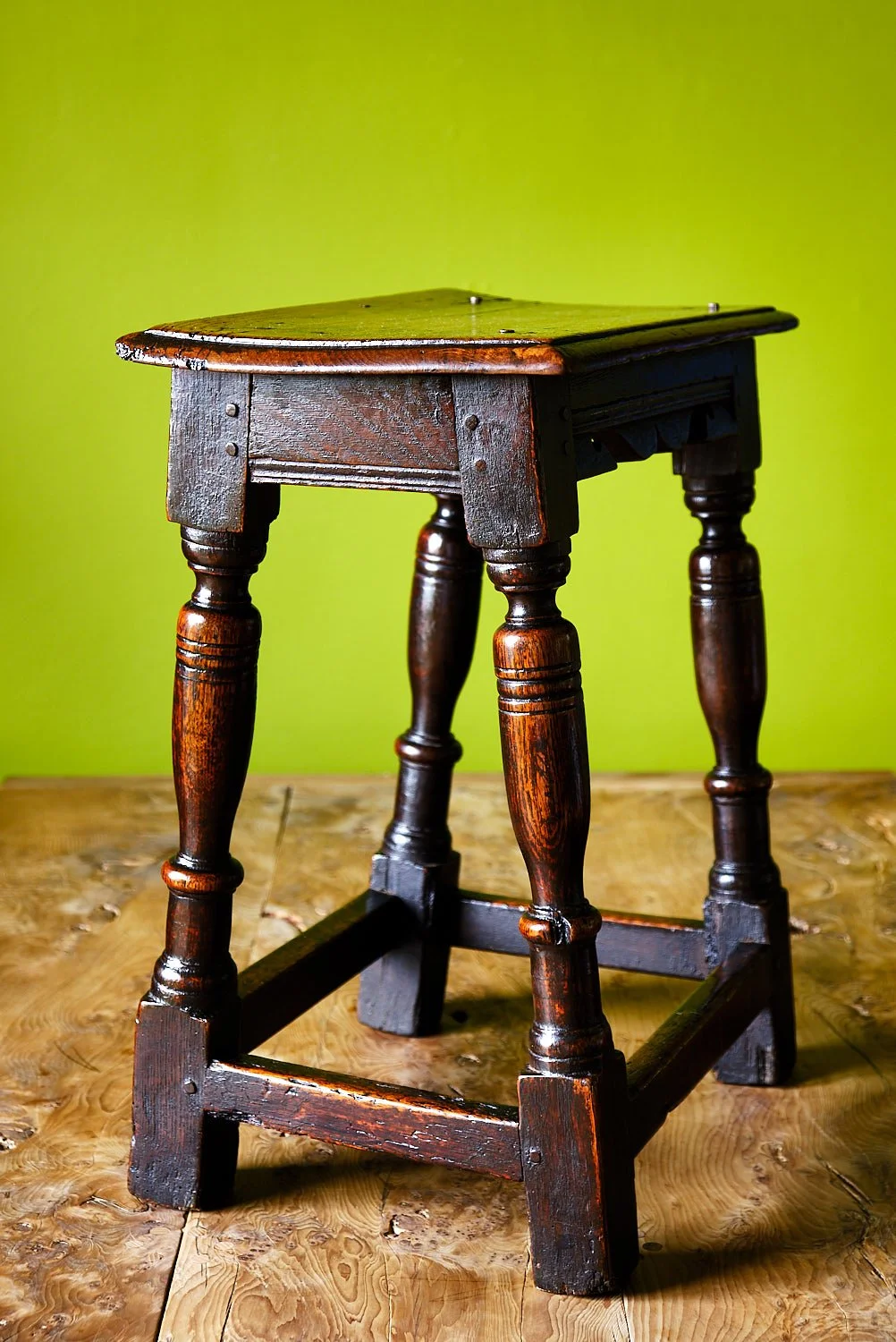 Image 4 of 9
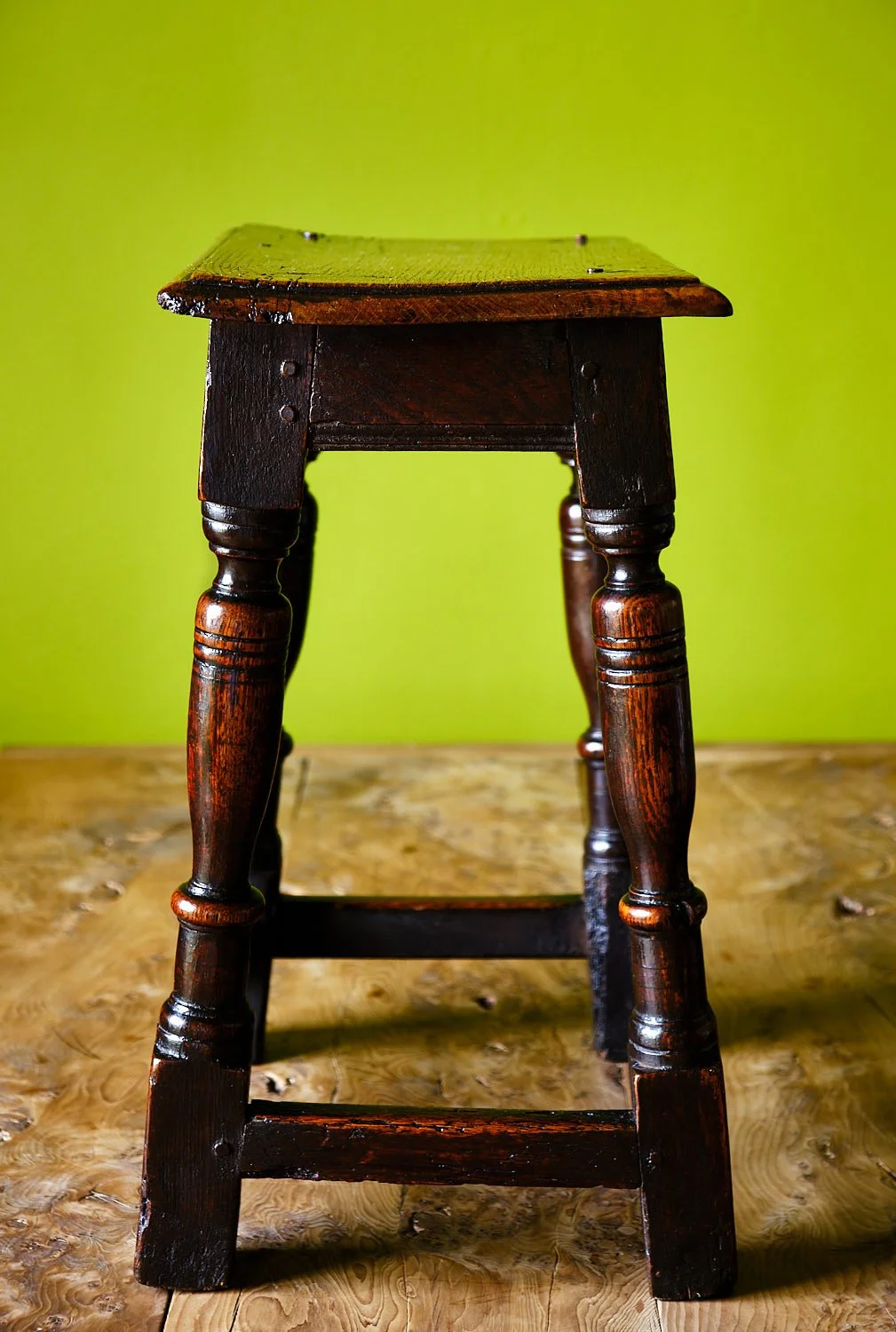 Image 5 of 9
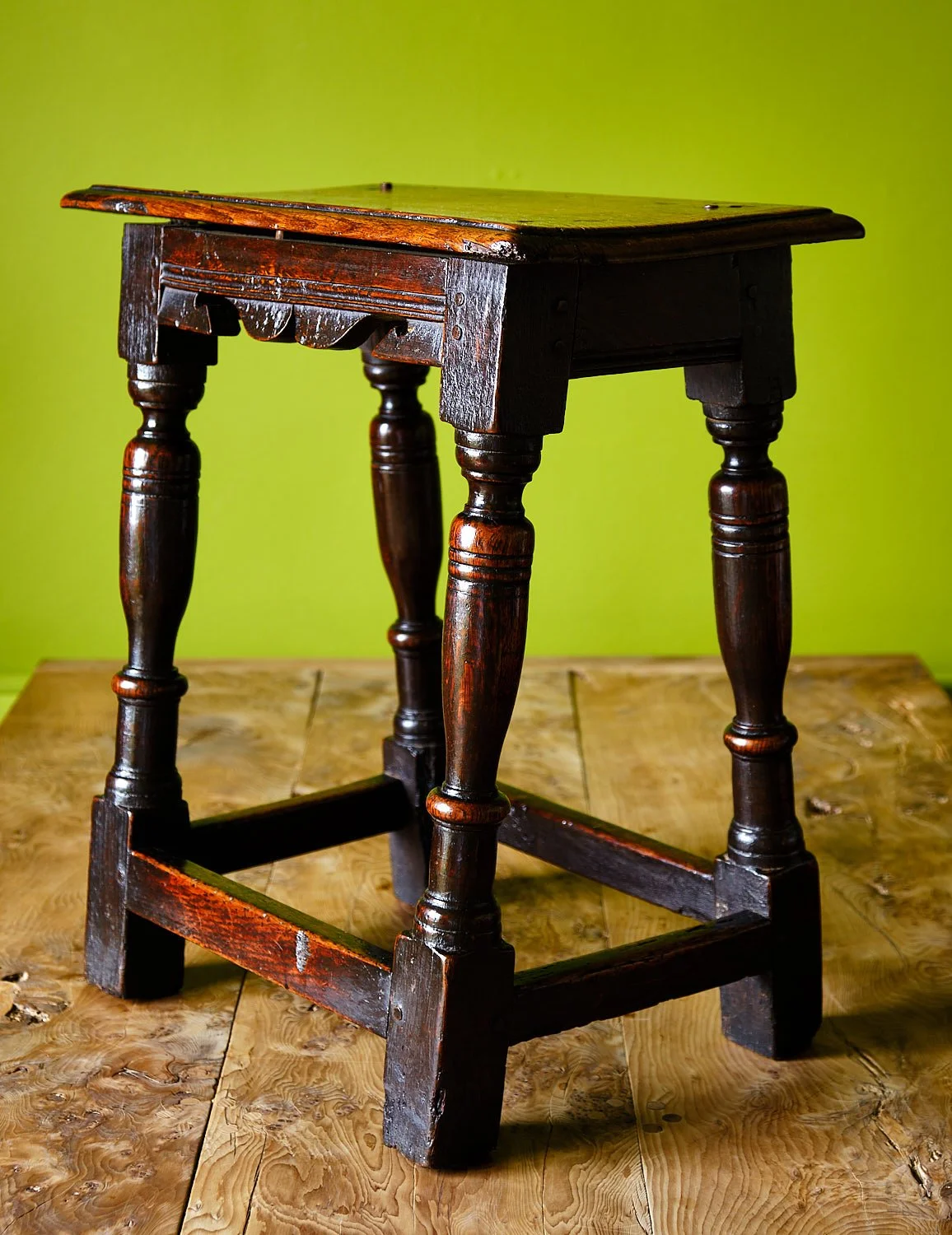 Image 6 of 9
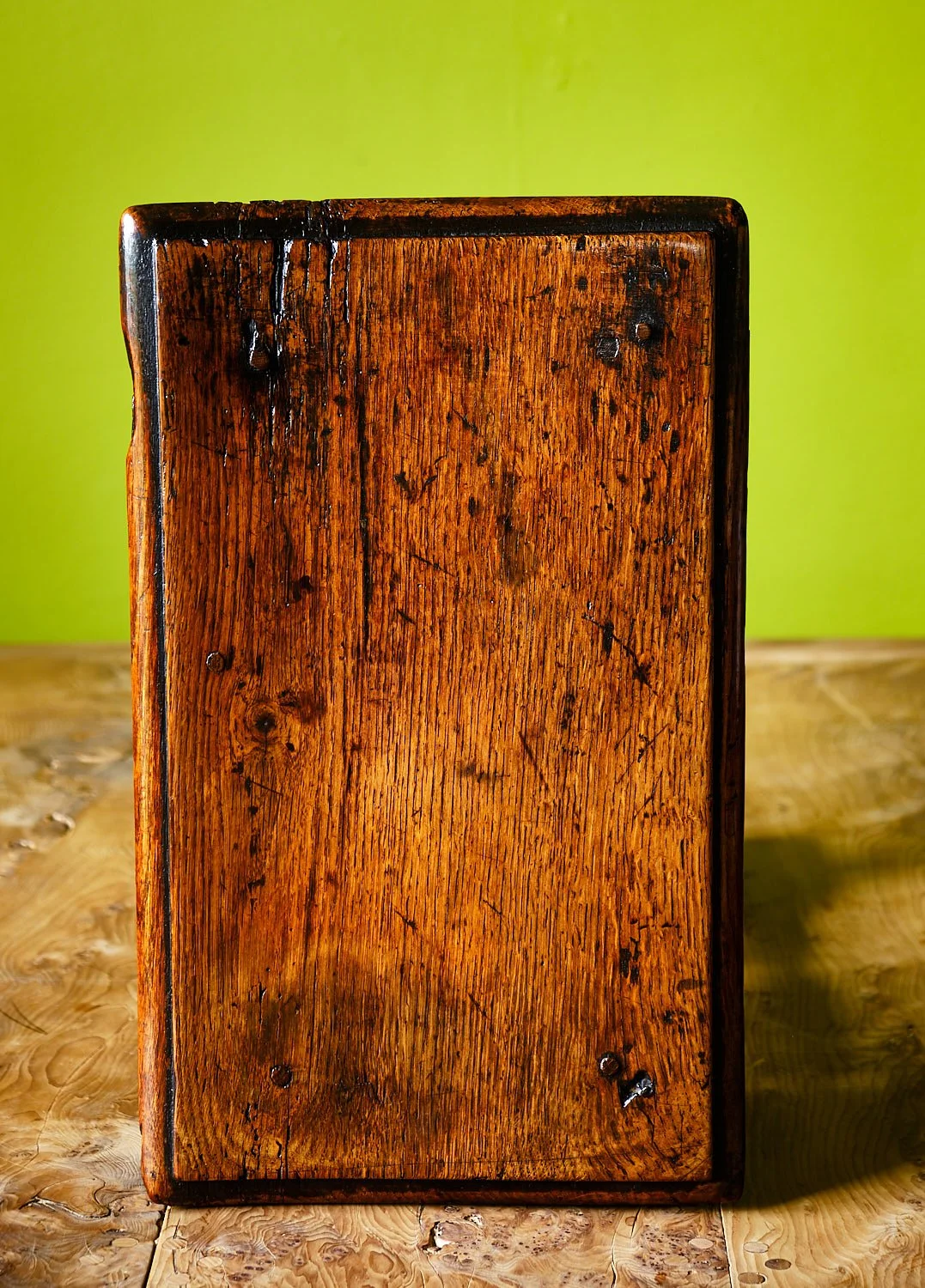 Image 7 of 9
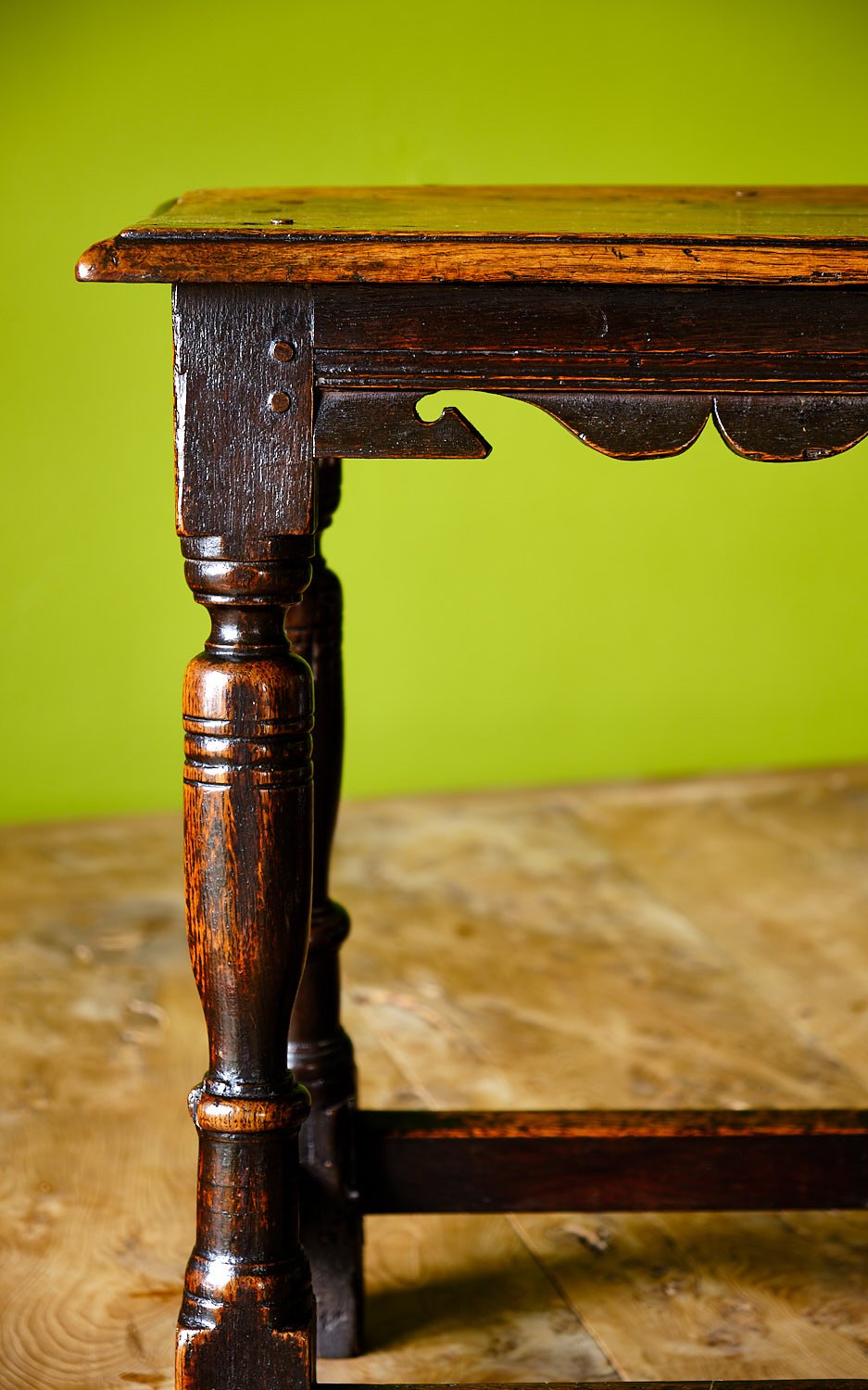 Image 8 of 9
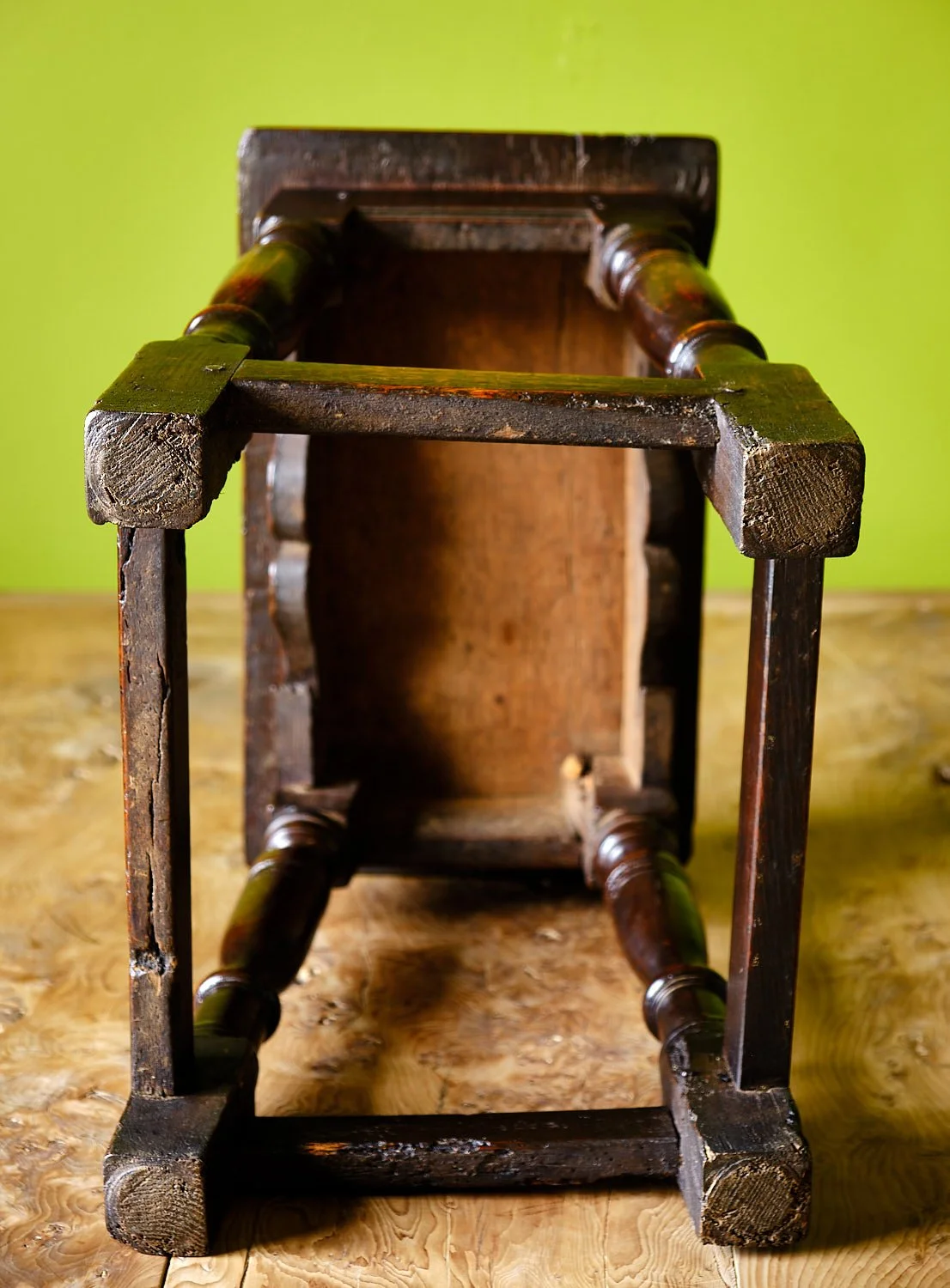 Image 9 of 9