The colour and patina on this substantially constructed stool are exceptional. The recessed panel top is made from a well-figured, single plank within a heavily moulded border. Very unusually, this moulding is carved into the tops of the legs to give a more finished, framed appearance which would also allow for a cushion or squab.
The well-drawn, ring and baluster-turned legs are joined by a moulded-edge frieze and moulded-top stretchers, on ball feet (one later retipped). There is evidence to suggest that this stool incorporates reused material when constructed around the end of the 17th century. English, circa 1680-1700.
Dimensions:
45 cms x 35 cms x 44 cms high.
Literature:
Early British Chairs and Seats 1500-1700 by Tobias Jellinek, page 254, plate 346, where he illustrates a similar stool with recessed wooden top, described as a rare low stool, English, oak, circa 1680.
The colour and patina on this substantially constructed stool are exceptional. The recessed panel top is made from a well-figured, single plank within a heavily moulded border. Very unusually, this moulding is carved into the tops of the legs to give a more finished, framed appearance which would also allow for a cushion or squab.
The well-drawn, ring and baluster-turned legs are joined by a moulded-edge frieze and moulded-top stretchers, on ball feet (one later retipped). There is evidence to suggest that this stool incorporates reused material when constructed around the end of the 17th century. English, circa 1680-1700.
Dimensions:
45 cms x 35 cms x 44 cms high.
Literature:
Early British Chairs and Seats 1500-1700 by Tobias Jellinek, page 254, plate 346, where he illustrates a similar stool with recessed wooden top, described as a rare low stool, English, oak, circa 1680.
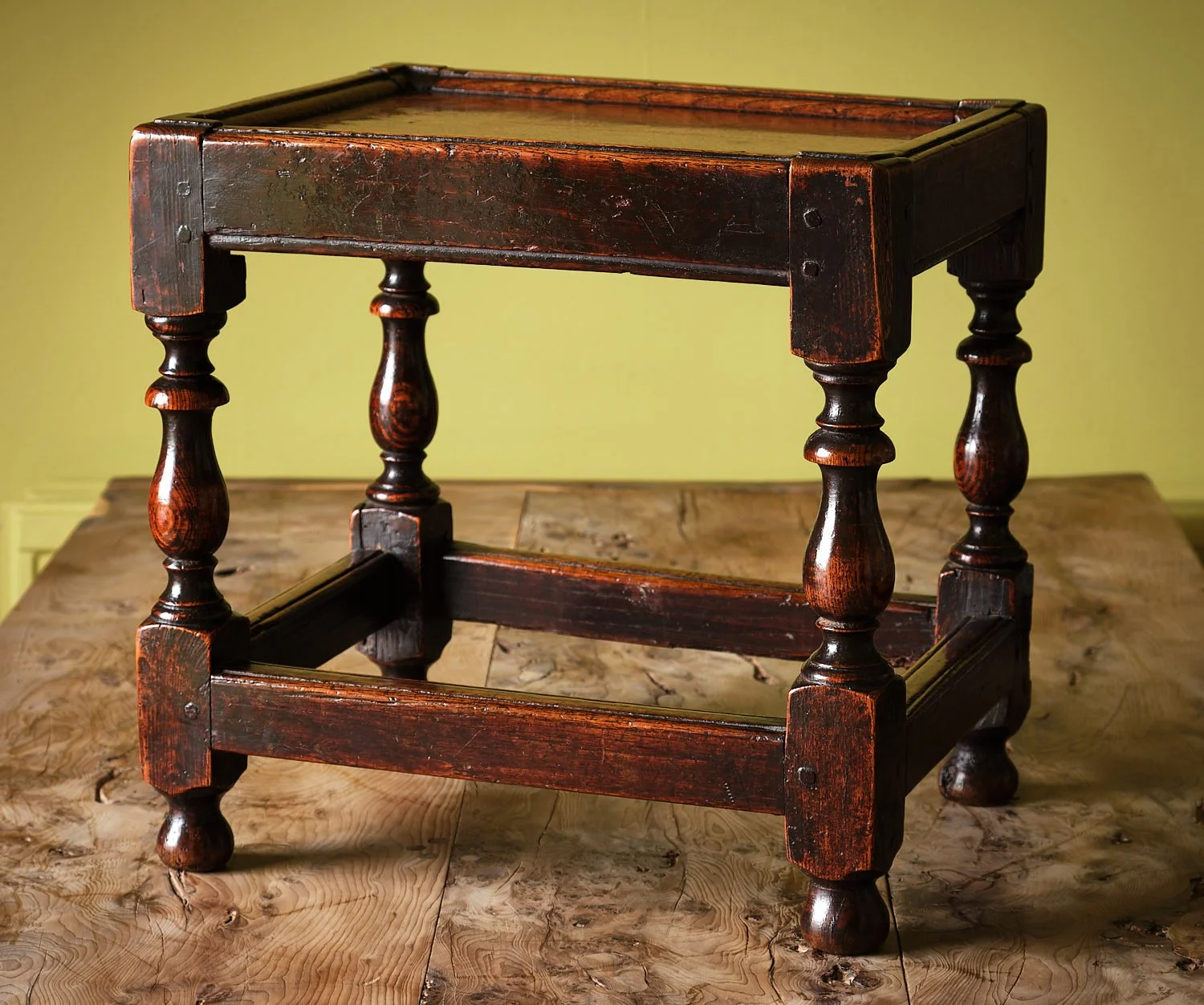 Image 1 of 8
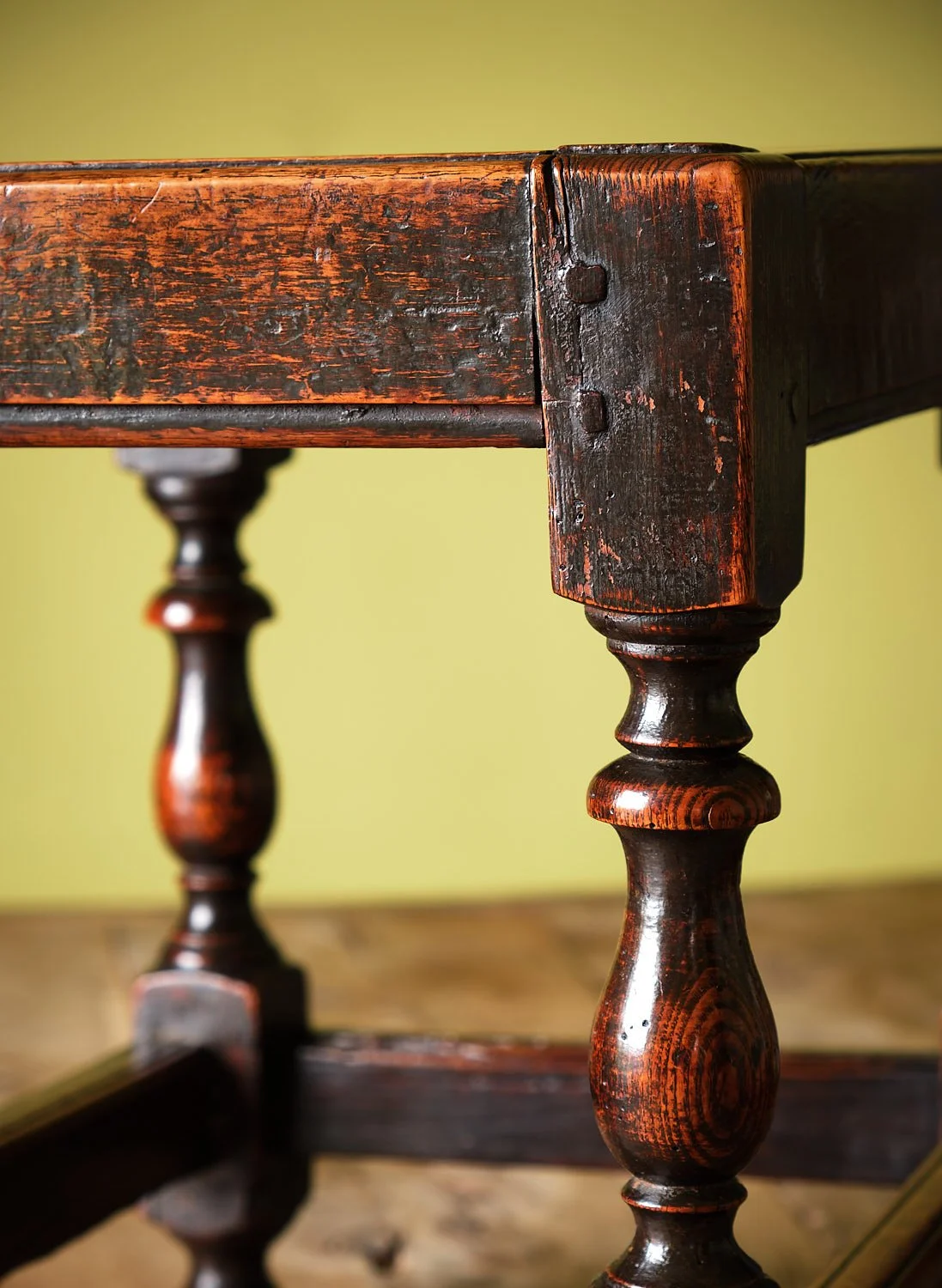 Image 2 of 8
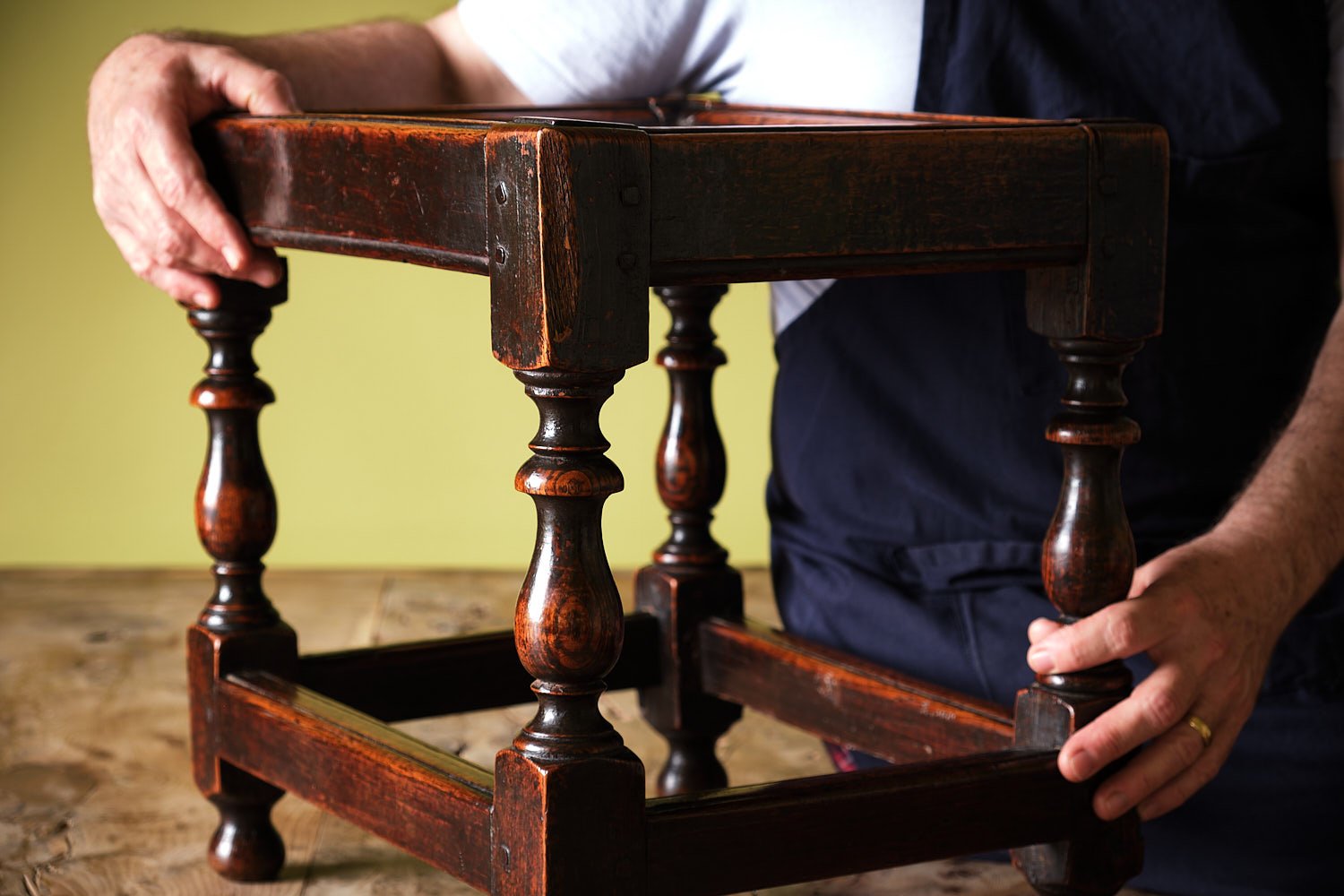 Image 3 of 8
 Image 4 of 8
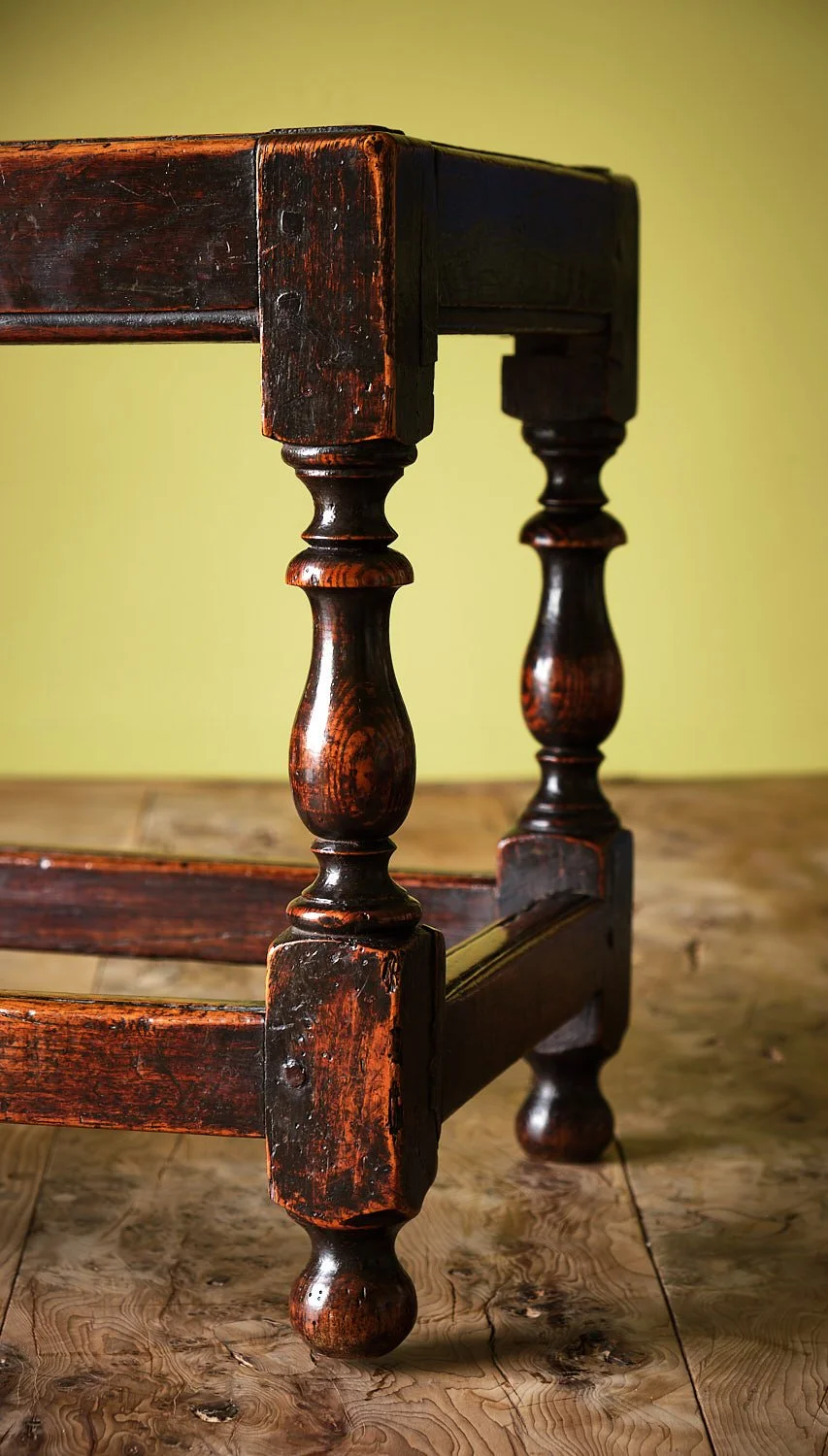 Image 5 of 8
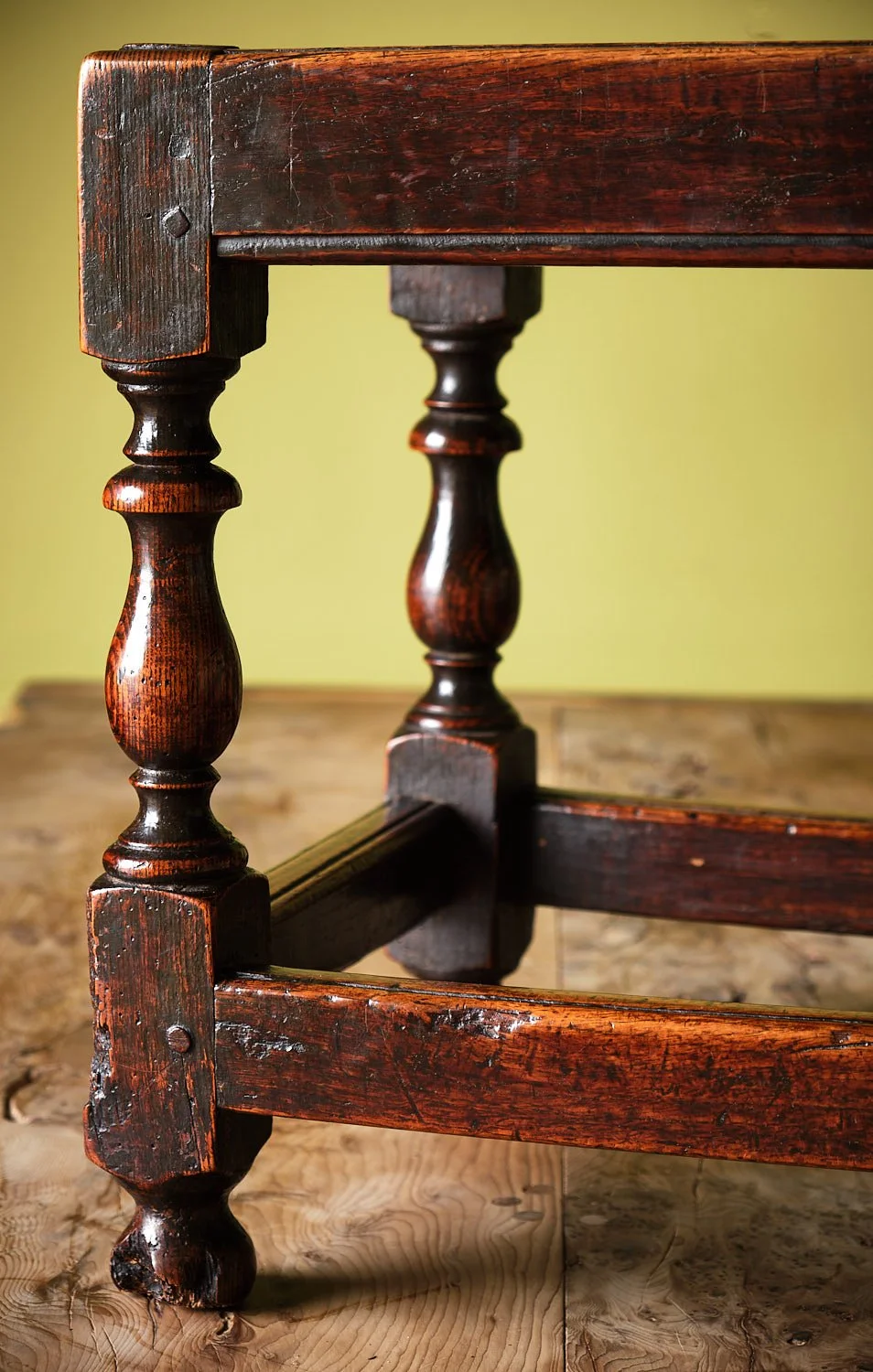 Image 6 of 8
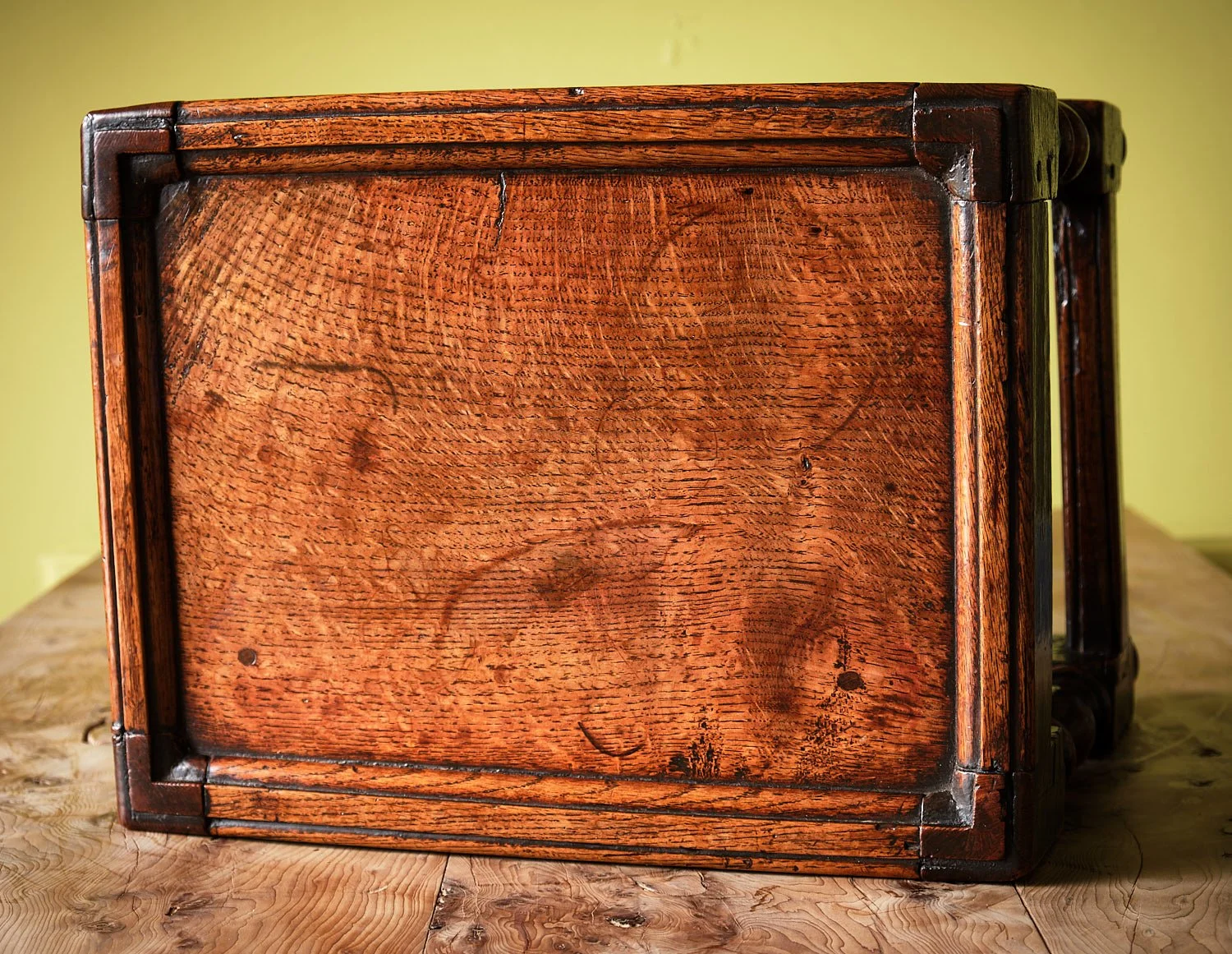 Image 7 of 8
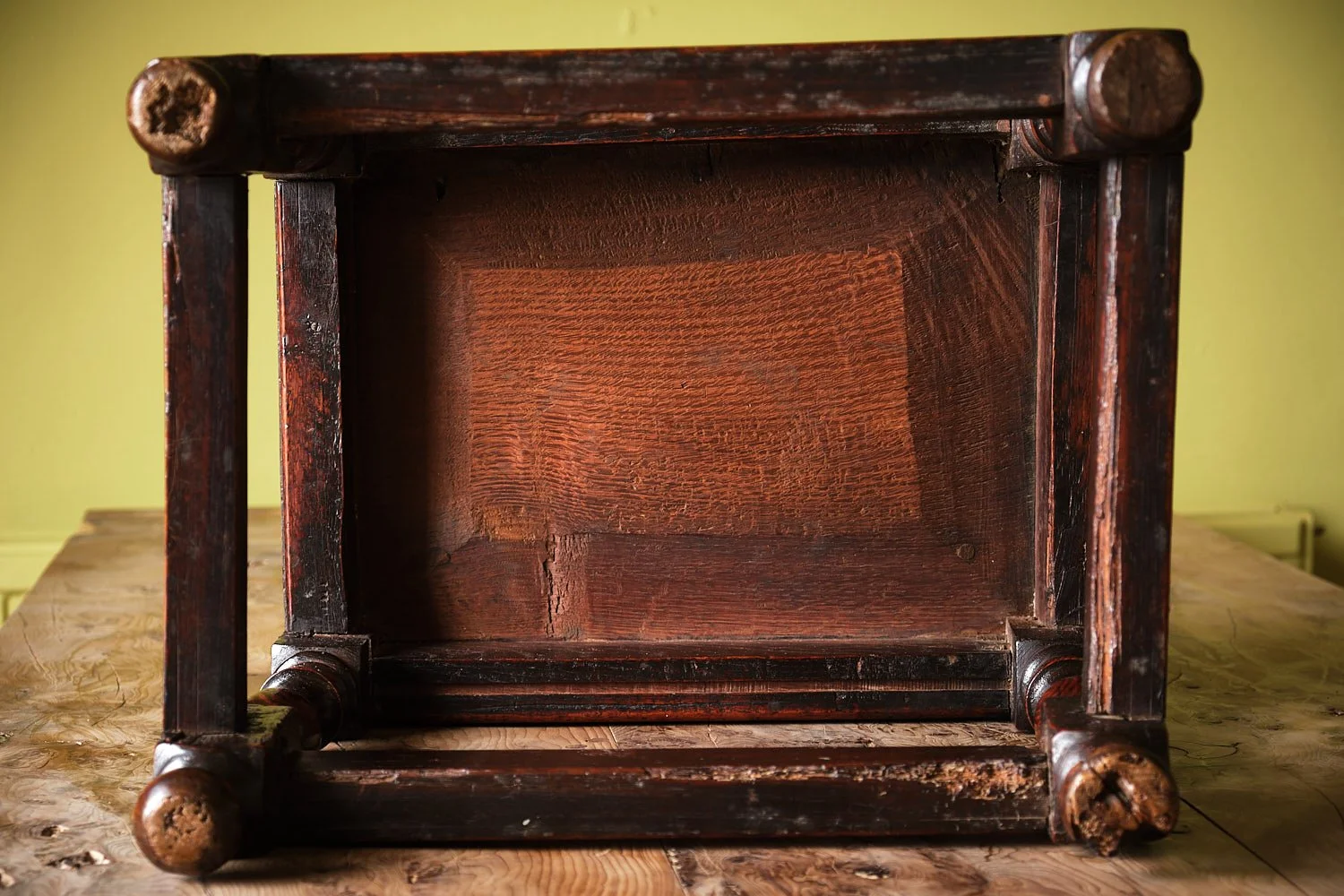 Image 8 of 8